

Ancient War Relics
During many ages Europa was the scene of the most extensive battles fought in human history. With the growth of populations and the evolution of technology the very early battles became larger and used more types of (metal detectable) material. By the rappid invention of new combat technologies different era's and battles can be identified. Besides projectiles of all shapes and sizes, pieces of soldiers gear and uniforms can also be found scattered around Holland.
Projectiles
During the past years I was able to find most types of projectiles used from the early ages up unto modern warfare. As can be seen below the evolution of the small arms bullet had several era's before ending as the now used metal bullet with metal casing.
Before the old type musket bullet the so called Harquebuss ('Haakbus') and Blunderbuss ('Donderbus') were the very first rifles used. The Harquebuss merely was a pipe sealed at the end, it could hold gunpowder, fuse and a rudely crafted lead bullet. The bullet was larger and did not exactly fit the pipe - pipes and bullets came with slightly different shapes. The Blunderbuss had the same mechanism and bullets, only this type had a pipe crafted upon a wooden stick (rifle) which could be aimed more directly with a large pedestal.

As can be seen above the projectiles history started with the early type musket bullet; although nicely shaped it still had the molding rod attached to it. Later era musket bullets had these removed. In transition to the gunpowder cased rounds, the minie ball types were used - many different shapes existed. By shaping the old musket bullet into a projectile it acquired more balance, accuracy and distance.
The next step into its evolution was the standard gunpowder satchels being used with the minie balls. This transformed slowly into one projectile body, as the gunpowder satchels were implemented with the minie ball into one paper cartridge. It did not take long for a primer to be integrated into the base of the paper cartridge.
Before ending up with the nowadays base primer cap different primers were invented. Among these were precussion caps (with gunpowder set off by the riffles hammer), pinfire (were as the primer was ignited by a pin triggered by the riffles hammer) and rimfire (as with the percussion cap, only the the gunpowder was in the rim and set off by the riffles hammer, which aimed only for this rim).
Late 19th century and early 20th century the already known paper cartridge minie ball was evolved into a more bullet shaped lead projectile. The paper cartridge was replaced by a brass cartridge to make it more durable. A centre primer was implemented into the base of the cartridge.
Eventually technology evolved into producing metal bullets instead of lead, which led to the modern era riffle round.
Arquebus
First gunpowder driven fire arms in Europe were the Arquebus and Blunderbus. The Arquebus was merely a metal pipe casted upon a piece of straight wood - sometimes just the pipe - with a hole in the back to light the gunpowder. There were no calibres yet - lead round balls were used as projectiles and ranged from 0.25" to 0.89" (6.4 - 22.6 mm).

The Arquebus, most simple type of rifle, used during the 15th century.

The evolution from the rifle with matchlock, wheel lock arquebus, snaphaunce, flintlock and percussion cap. All used lead ball shaped bullets ('musket balls') during the 15th to 19th century period.

The sheer magnitude of the lead bullets which can be found is still amazing. Not just millions but more like billions were spent in just Holland.
Since the Arquebus the same calibres and lead ball shaped projectiles were used as bullets for many later rifle types. Musket rifles (16th & 17th century) and even later models breach loaded percusion rifles with rifled bores (19th century) used these same lead ball shaped bullets.
The lead bullets I found ranged from 9mm to 21mm; most common sized diameters are around 16,2/17,0.
The most early lead balls (15th / 16th century) were crudely crafted without even removing the (molding) sprue - as can be seen below.


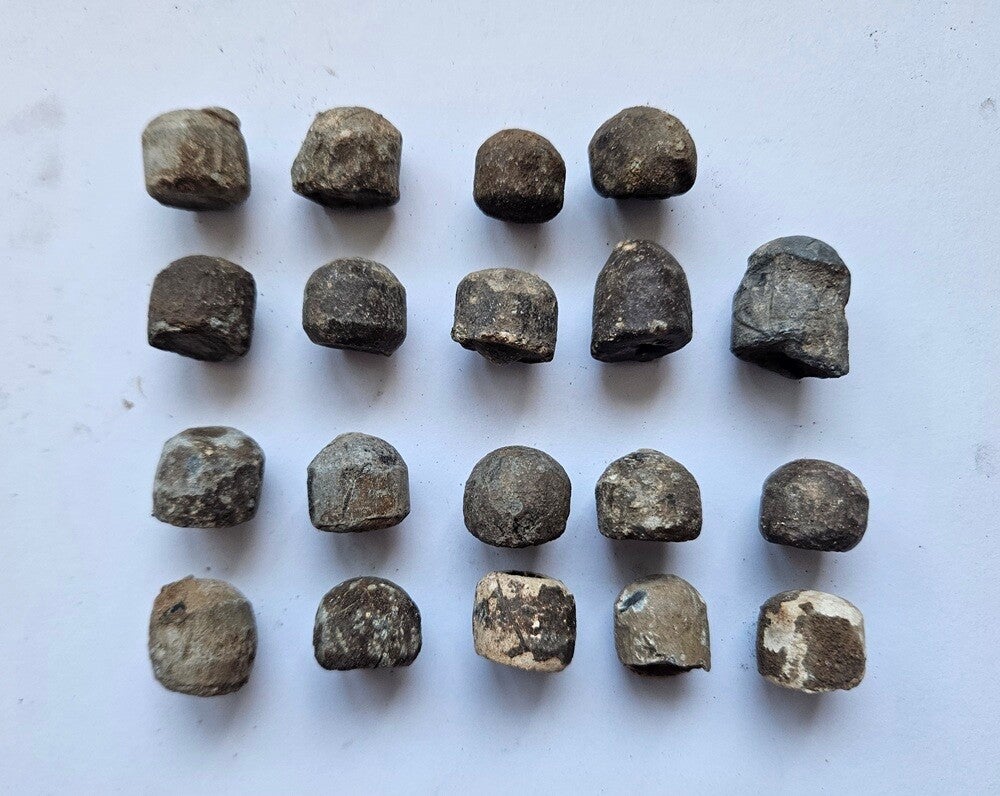


Above: oversized ball projectiles shot with a smooth bore musket rifle which had a smaller calibre. Projectiles which were too large were often adjusted. Needless to say due to these practices is was quite common to have musket balls stuck inside the bore. These were removed by scre-like tools and resulted in musket ball projectiles which were deformed and had an hole in one of their sides; as can be seen below.
The (removed) musket ball below on the utmost right has a very clear ball-shape inside its diameter, which has its flanks forcefully expanded around it. This ball was definitely not adjusted correctly (still too big) which resulted in getting stuck and being removed.


Musket rifles with Flintlock
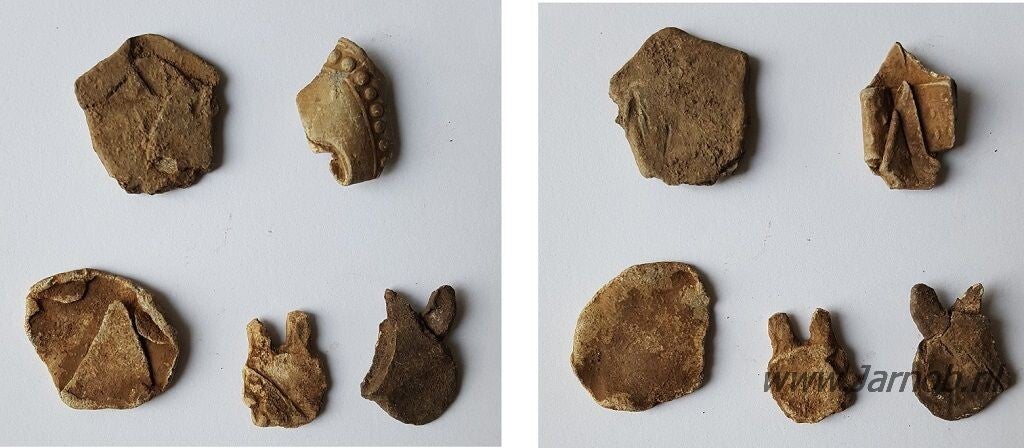

Besides the lead musket balls other artifacts can be found also. If you're lucky you will find the lead pieces which held the flint inside the hammer of the flintlock mechanism. As can be seen above; to the utmost right two flintlocks used for flintlock rifles - the small spent bits along the edges are visible.
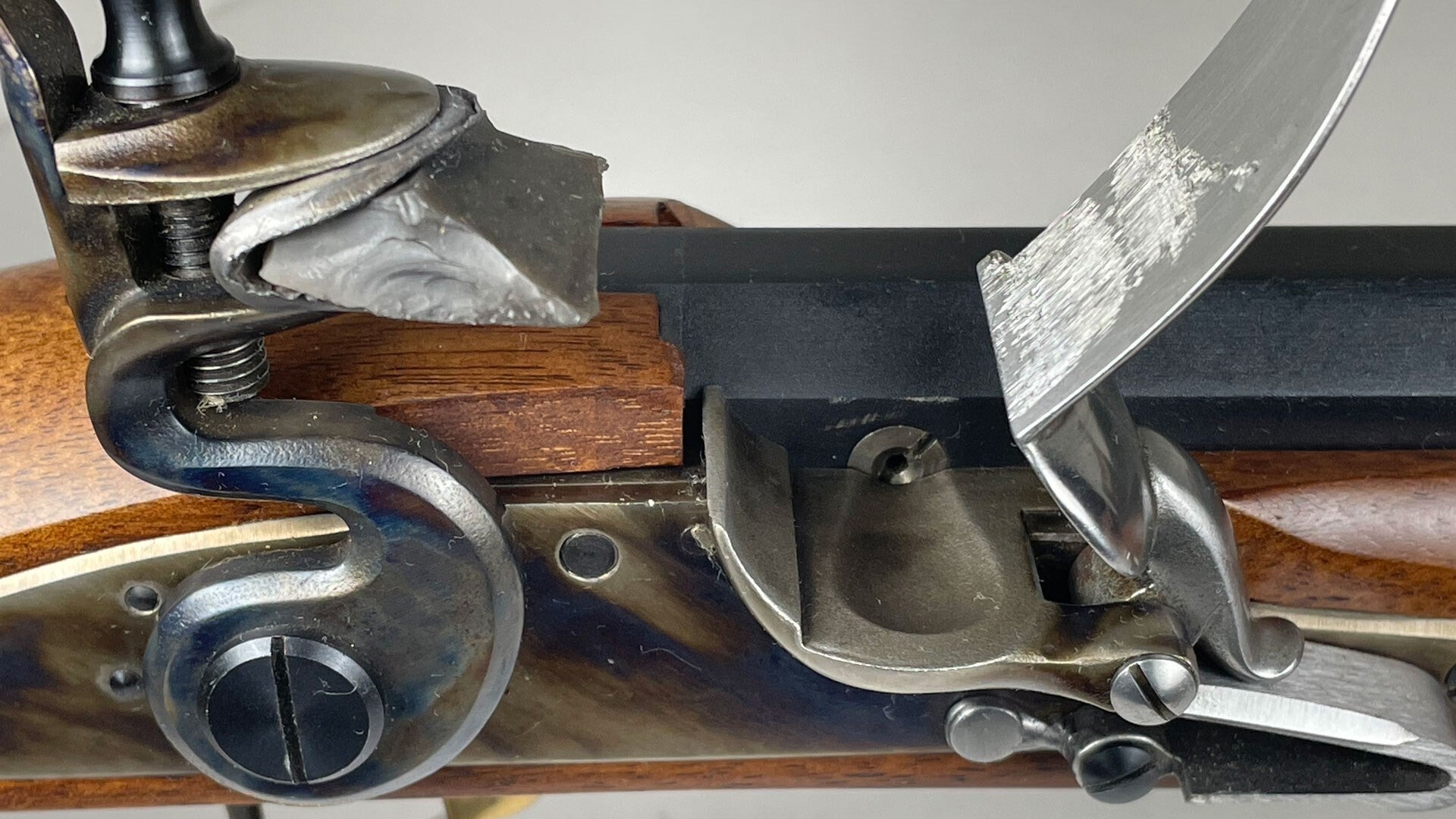
And if you're really lucky you could find parts of the musket riffles/ pistols themselves! As can be seen below: a locking plate opposite the rifle of the firing mechanism which held it in place. This one has a mark inside, unfortunately too much worn to read. This particular rifle is a French M1822 (late musket rifle) which resembles the found locking plate most - although it could very well be an other model of around this era. i.e. the M1822 was derived from the US Springfield M1816. And to be honoust, judging the ketches below of pistol and rifle parts, you could already have found a part which is not easy to identify as originating from a pistol/ rifle!


To give an impression of some weapons used with lead 'musket balls':
| Rifle Type | Model | Century in use | Ball diameter |
|---|---|---|---|
| Arquebus | ('Haakbus') | 15th | 6.4 - 20.5 mm |
| Blunderbus | ('Donderbus') | 16th | Large calibre (38 mm) buckshot |
| 'Vuurroer' | small calibre Musket rifle | 16th / 17th | 11 mm |
| Matchlock Musket | (general) | 16th / 17th | 12.7 - 20 mm |
| Matchlock Musket | Spanish | 16th / 17th | 16 - 21.6 mm |
| Flintlock Musket | Spanish M1752 | 18th | 17.5 mm |
| Flintlock Musket | Prusian Potzdam M1723 | 18th | 18 - 20 mm |
| Flintlock Musket | French Charleville M1717 | 18th | 17.5 mm |
| Flintlock Musket | British Brown Bess M1722 | 18th | 18.5 mm |
| Flintlock Musket (rifled bore) | British Baker Rifle M1800 | 19th | 15.6 mm |
Rifled ball projectiles
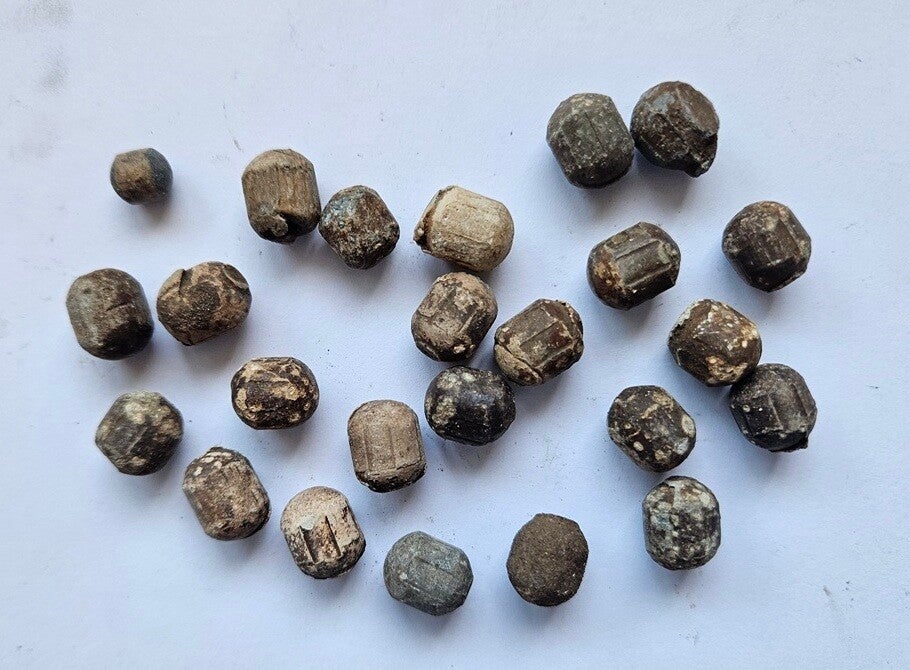
As can be seen in the previous table the British Baker Rifle had an 'old' type flintlock mechanism and was loaded with the same gunpowder and lead musket ball. This rifle did not have a smooth bore but was one of the first new types with a rifled bore. This meant more stability of the projectile thus better accuracy and distance. These bullets, just as modern bullets, had, once shot, rifling marks along its body: grooves. At this moment though the projectile was in a trasition phase, right now it was still ball shaped, but with grooves; as can be een on the right.
These particular ball shaped bullets are 11.5mm - 0.45 calibre. These most likely came from a light rifle/ carbine.
Minie ball projectile
In 1846 Claude-Etienne Minie ivented one of the first 'cylindro-conical' projectiles: a more bullet shaped projectile for rifled weapons - henze the name 'Minie-ball'. Rifled bores just were invented and the flintlock was not used any more - for fusing percussion/ rimfire/ pinfire and centrefire became the new technology.
Many new rifles were developped in the 19th century. During this period no large scale combat was seen in Holland. At the start of the 19th century Napoleon occupied Holland without real combat and 15 years later they would be driven back to their homeland all the way from Russia - some skirmishes took place in the area were I found these bullets.
I found large quantities of interesting Minie-ball type bullets all in one area. Nearby are old exercising grounds for 19th century Dutch troops and a 'Kogelvanger' (shooting range with a large hill as bullet trap). So either this area was also some kind of exercising area of dirt from the other areas were scattered here. I could not find any good explanation at this moment. Still, it was a finding place of really nice bullet relics! (unfortunately a large residential area is built on top of it now).

11 mm / 23.0 gr
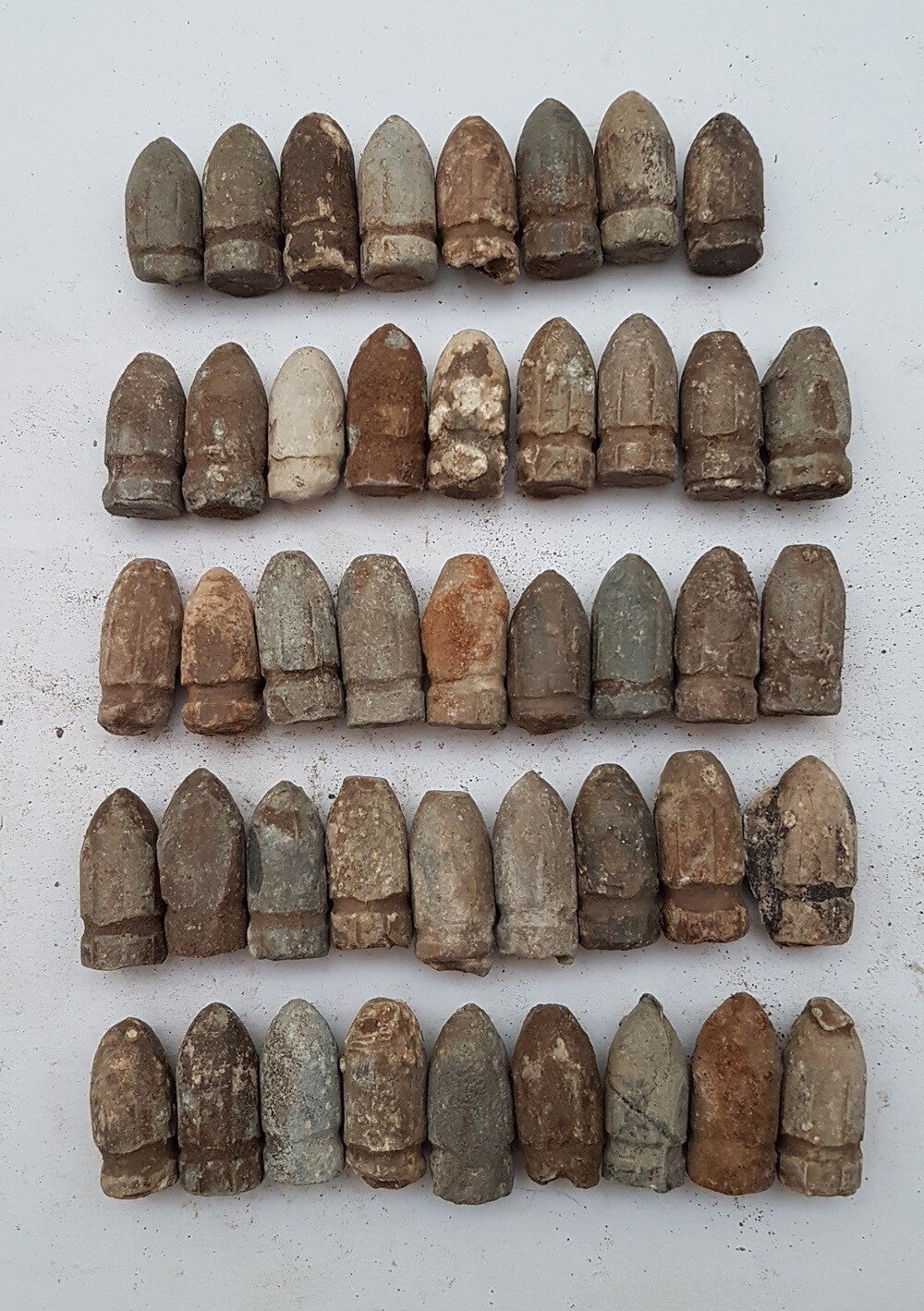
11 mm / 20.5 gr

11 mm / 9 gr

11 mm / 12.8 gr
To make identification difficult: most new era rifles had a bullet diameter of 11+ mm. So identification depepends on the shape of the bullet itself - what makes it even more difficult: some rifles shot different models of bullets...
So breaking it down to the rifles the Dutch army used during the 19th century: the new area type which shot these types of Minie balls was the M1871 Beaumont rifle, a derivation of the well known French Chassepot / Gras rifle, shooting the same rounds. And it shot 11mm Mini ball type bullets, the same types as can be seen above among these photographs.
The Beaumont rifle replaced the Dreyser needle gun in the Dutch army, which also used flintlock muzzle loading rifles converted to breech loading rifles with Snider loading mechanisms - to make things more complex... The Dreyser used acorn-shaped projectiles, which I did not find, and the Snider adapted rifles used 14.5 mm bullets which I did not find either.
The M1871 was developped into the M1888 with small cartridge. Both versions used bras casings - which I also found some.

9 mm / 13.3 gr

M1871 Beaumont rifle

M1871 Beaumont rifle
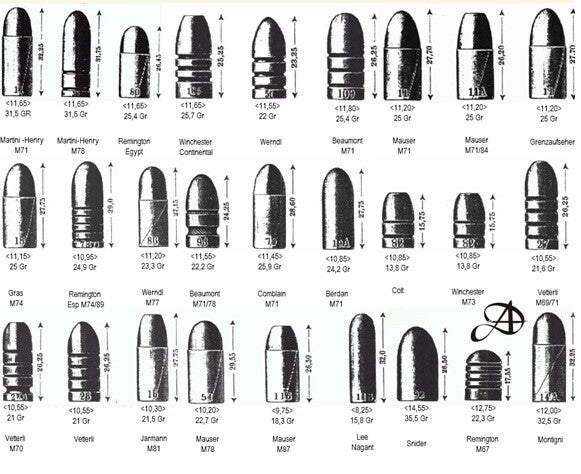
Chart depicting the great number of 11 mm cartridges used during this period

11 mm Mauser, Gras and Reformado

Different types used by the 11mm Gras

11 mm bras casings

Minie ball bullets assembled
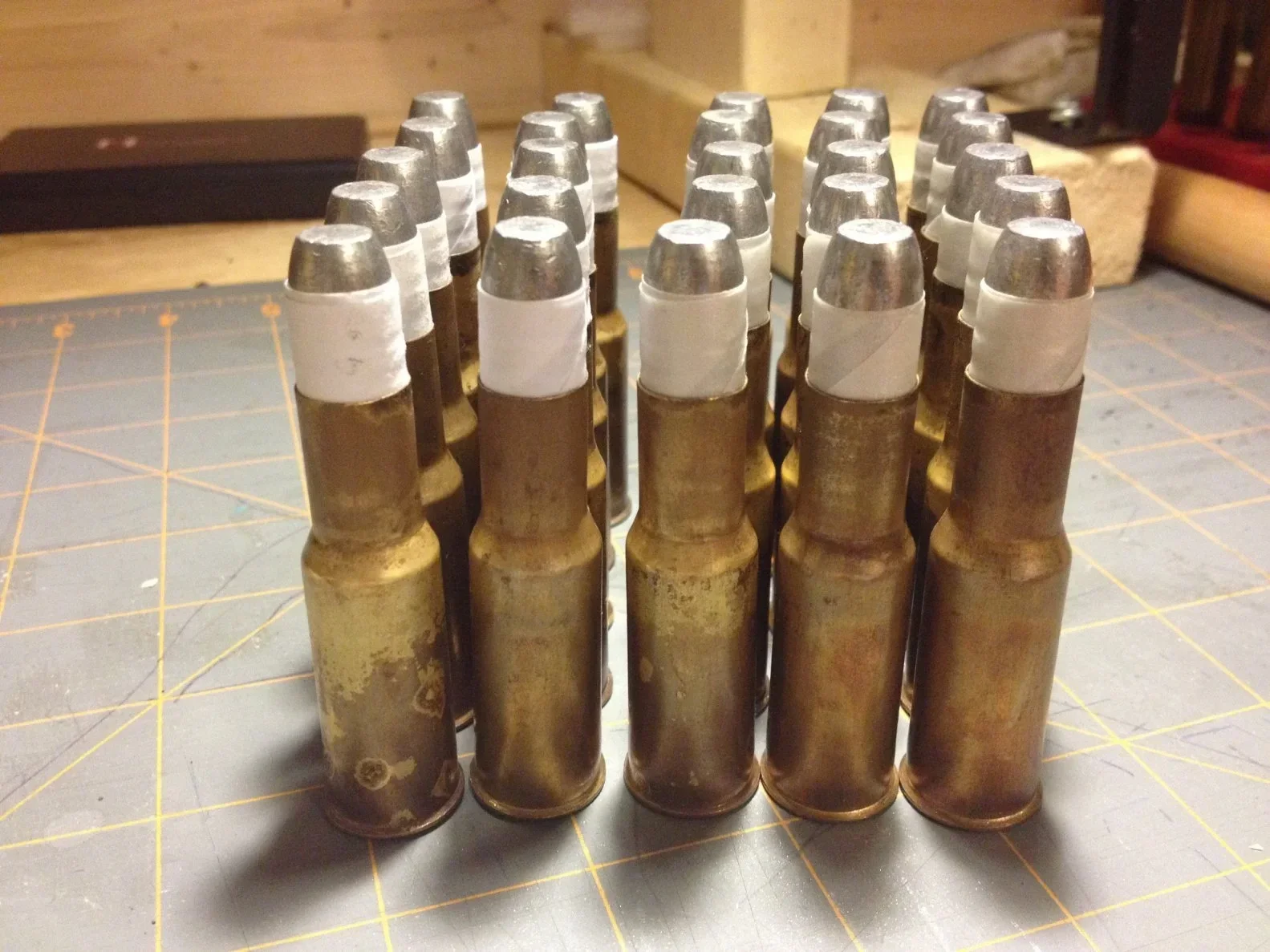
Minie ball bullets assembled

Small overview of different casings


Brass cases as can be seen in the samples above - these are found mostly on the same fields as the lead bullets. these cases were crude and had no headstamp markings; all had (rectangular) rims like in the samples.


These are more extraordinary cases of the same built; the most left (black) casing has its centrefire somehow sticking out of the base. The one next to it is marked with '81' '10' - a headstamp which was used on Dutch Beaumont rifles and referred to 1881 !


Two more deviating casings: these both have angled rims instead of rectangular (a bit difficult to see on photographs). These look a lot more like the Mauser casings like in the overview and sample photo's above - not sure if these same casings were used in Beaumont rifles.


Besides many found shotguns shell centrefire remnants (not shown here) I also found this all paper 'shotgun shell' remnant. It has a centrefire mechanism, I do not know if this type was used for early shotguns/ hunting rifles or something else.

On the same fields I also found some deviating bullets - as can be seen above. It looks like some proving grounds too?
Their diameters in mm:
1st row: 8,4 / 13,4 / 11,1 / 10,9
2nd row: 13,9 / 10,8 / 8,2 / 11,9 / 10,6

Dutch colonial troops (late 19th century) on their way to their transports for the Dutch East Indies. These troops used the Beaumont rifles (among other types).
Large caliber projectiles
A more rare, but not impossible, find can be cannonballs. And by the dimensions, weight and known battlefield these can be identified by nation and type of artillery used. I was lucky to find two good samples, both able to identify:
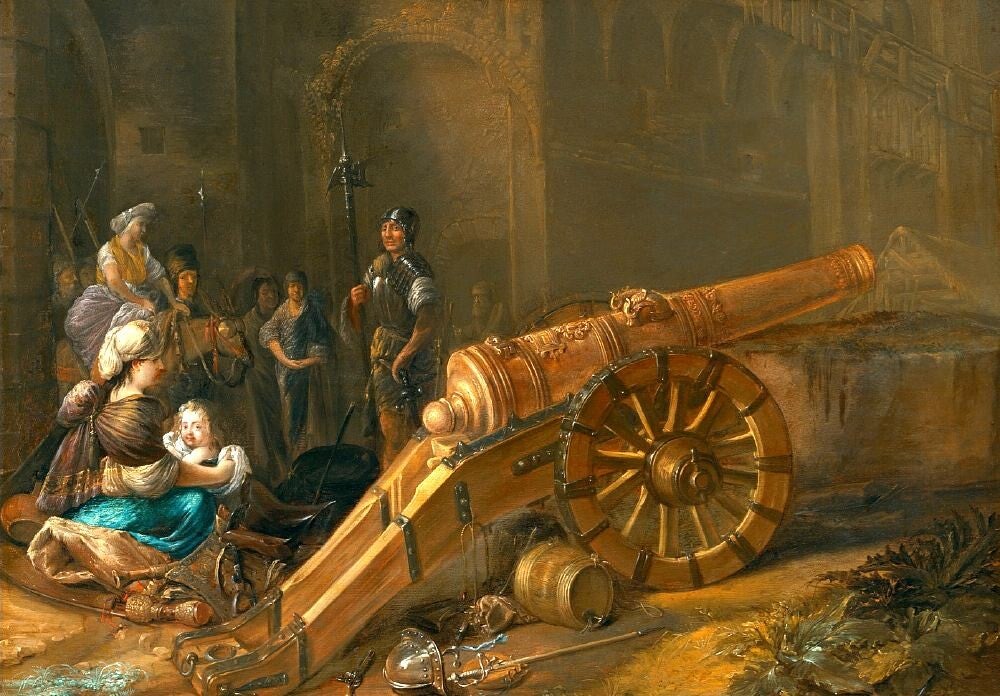


The first was a 'Halve Kartouw' type cannonball (24-pounder), weighing 10,5kg with a diameter of 12cm. This one was found on a field exactly were a small Spanish ramp used to be during the Siege of Breda 1624-1625. Much can be found about this famous siege. Both armies had the Halve Kartouw cannon in their service. So either it could be a well aimed shot from the Breda Garrisson, or, more likely, one of the Spanish ammo inventory cannonballs somehow lost near their own artillery. It must be noted that the Halve Kartouw needed much logisitics for usage and transportation - for merely transportation it needed 19 horses! This was the most heavy gun used during military campaigns, and once in place it could not be re-positioned easily.


The second cannonball is a 1/8 Kartouw (6-pounder) found near Bergen op Zoom. The field it was found on was a scene of fierce battles during the Siege of Bergen op Zoom around 1747 by the French armies. The so called used artillery cannon was a Falconet.
Recovery of a Canonball
Now to get back a bit more to metal detecting. The canonballs we found always gave a clear, small(!) and good (coin like) signal. Always go after these hits - it might be a perfect piece of aluminium sheet but you never know!
First of all digging out the canonball, thats a true workout getting a 10kg metal ball out of the ground with no grip for your fingers. Second of all, the way I did it, washing the canonball and cutting of the heavy rusty parts. After this start up an electrolysis bath: the canonball (kathode) goes to the negative(-) pole of the power supply (I used 18vdc, max 10A) and the positive(+) goes to the rust-attracting metal sheets (anodes). As a conductive liquid I used Natriumcarbonide (soda). Keep replacing the anodes when these are saturated. Thats it. One clean canonball! (this one is the Halve Kartouw)


