

CV-34 USS Oriskany - Korean war
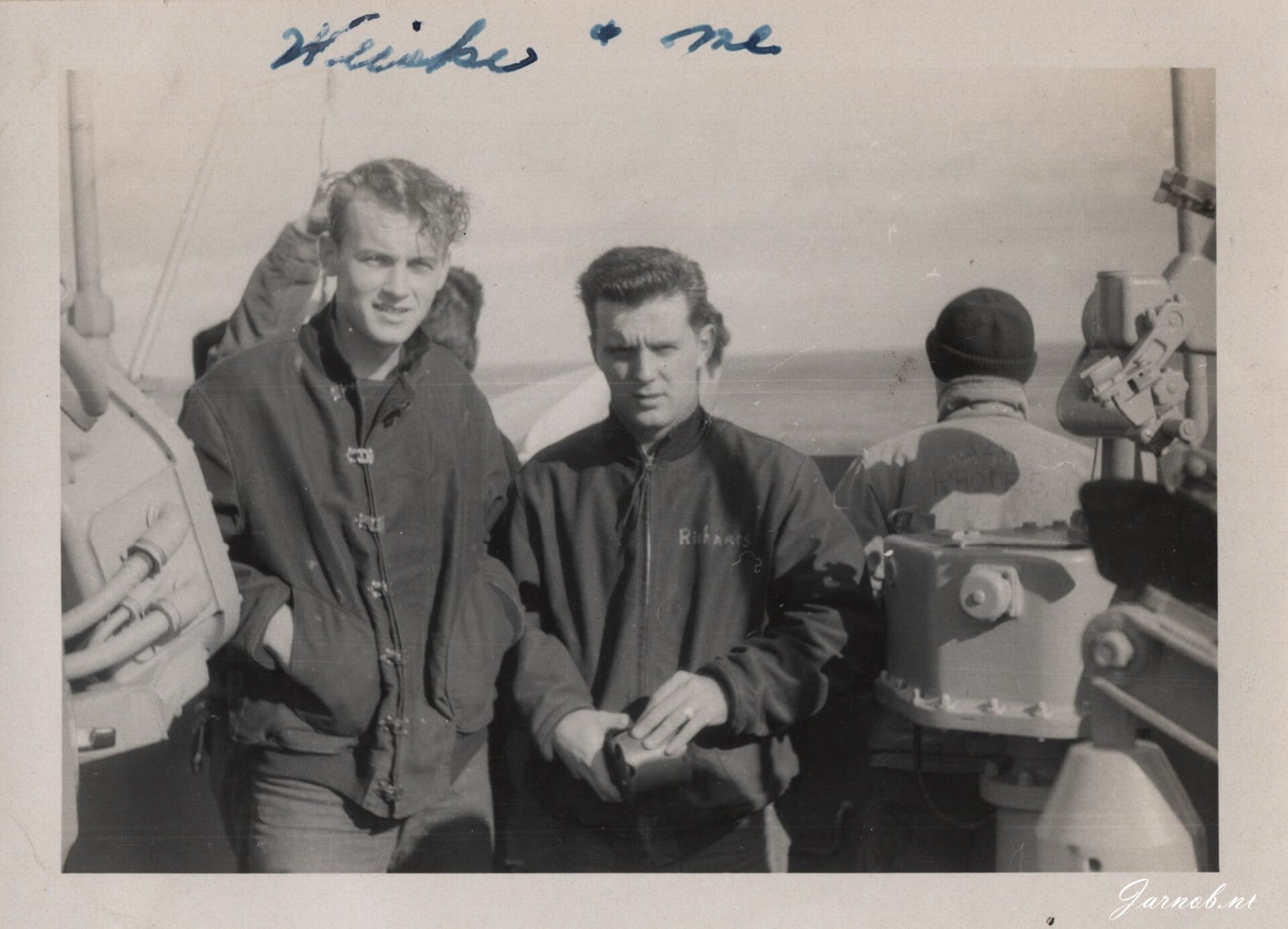
The author (to the right) and his colleague 'Weiske' standing on a bridge outside wearing their staff-jerseys - Richards is holding his camera.
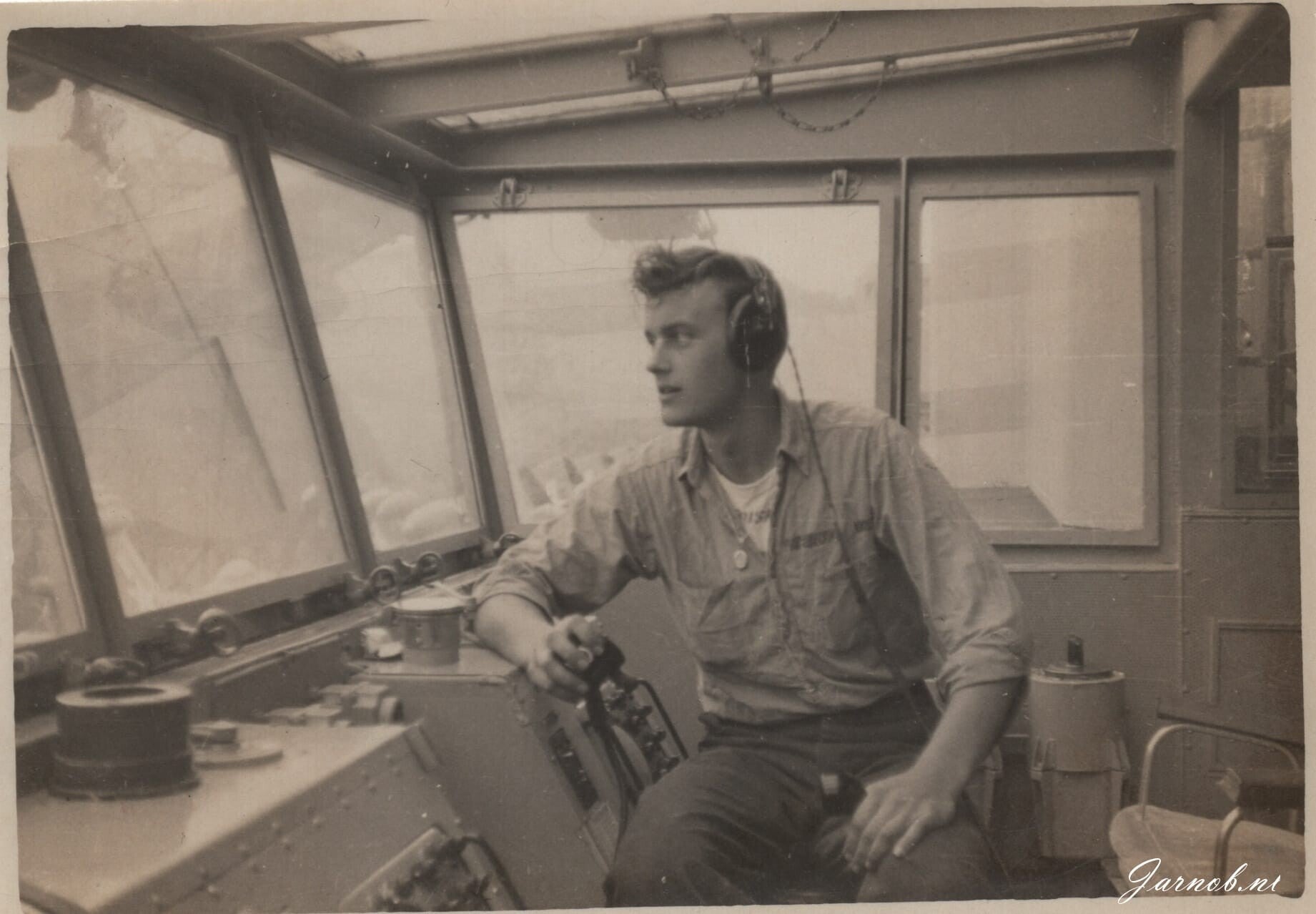
Weiske posing in one of the control rooms overviewing the flightdeck (not his actual working space)
The third photo lot covers the 1952-1953 Korean war combat cruise of the USS Oriskany - CV-34. This lot belonged to a crewman who was part of the general staff of the carrier. Many photographs of desks and administration aboard the carrier; a scale model of a F-9F Panther can be seen, some men (including officers) in official uniforms. The crewman, Richards, has a jersey with his name embroidered - as has some of his close colleagues - not a standard item for most crewmen! Under his Jersey he can also be seen wearing an Oriskany marked shirt. Besides this he has many photographs on special carrier locations/ occasions - as a staff member he had unrestricted access.
An interesting fact about his photo lot is that these are made during two consecutive cruises of the USS Oriskany: one combat cruise during the Korean war and a follow up cruise in the same region. Both cruises had different Air Combat Wings and events as can be seen in his photographs.
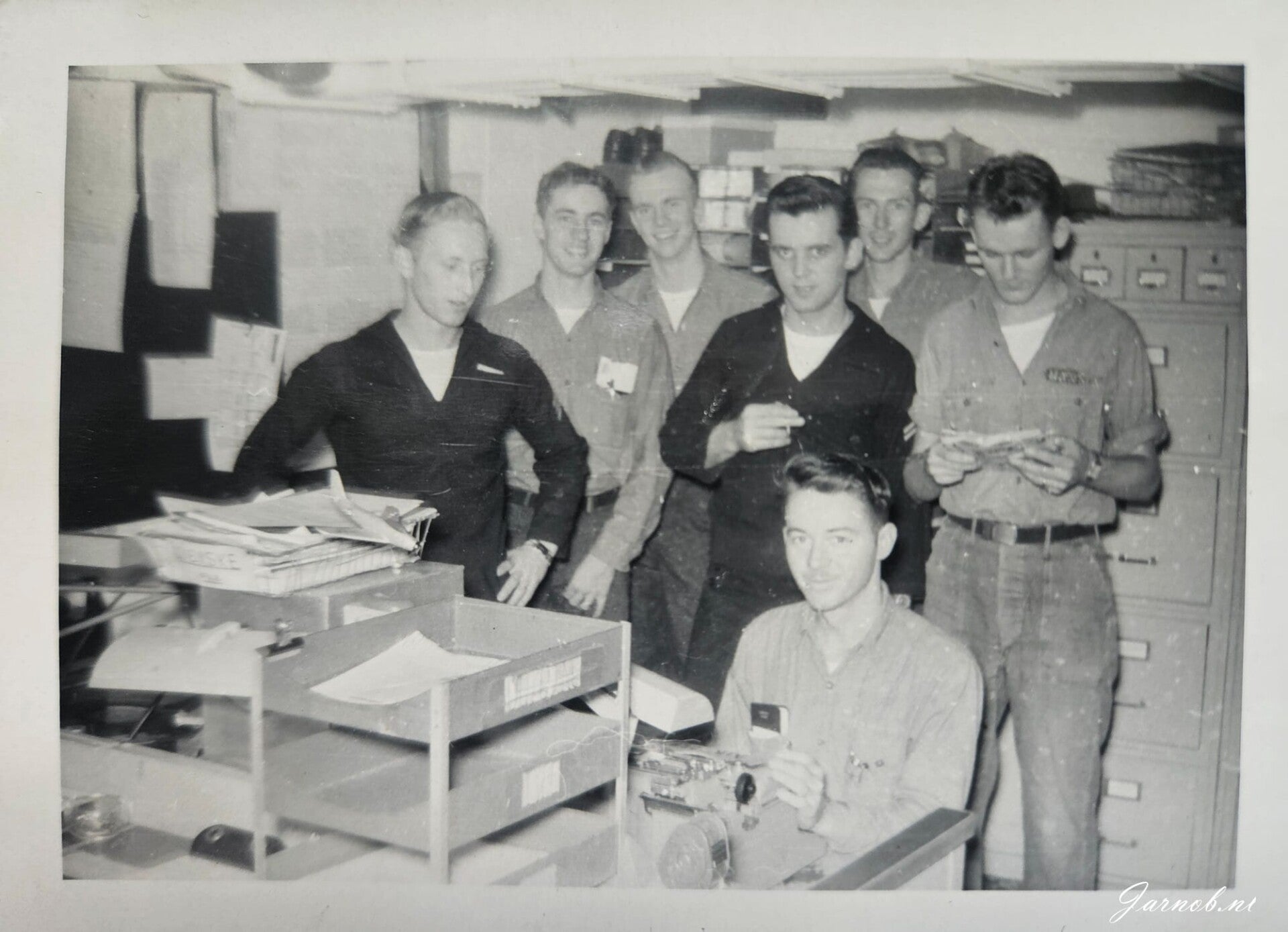
The actual working space of the carriers staff, including Richards. This photograph has all names written on the back:'Staighter', 'Mengel', 'Taylor', me, 'Stark', 'Hanson', 'Hawkins'. Also can be seen a papertray with 'Weiske' written on it and a scale model of a F86 (FJ3) Sabre.
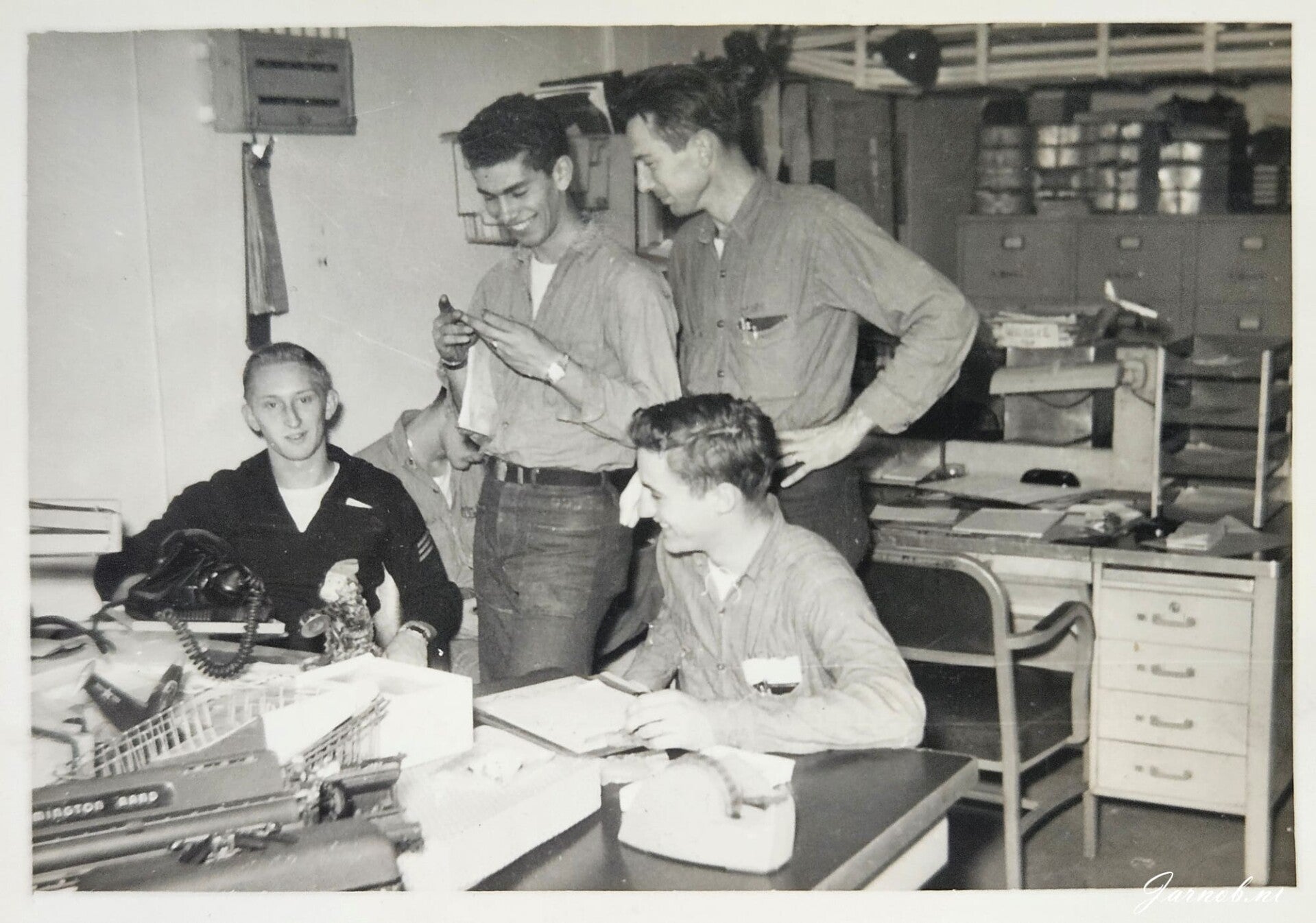
This photo has a scale model of a F9F Panther on it; 'Weiske's desk can be seen in the back (as can be seen by his papertray).
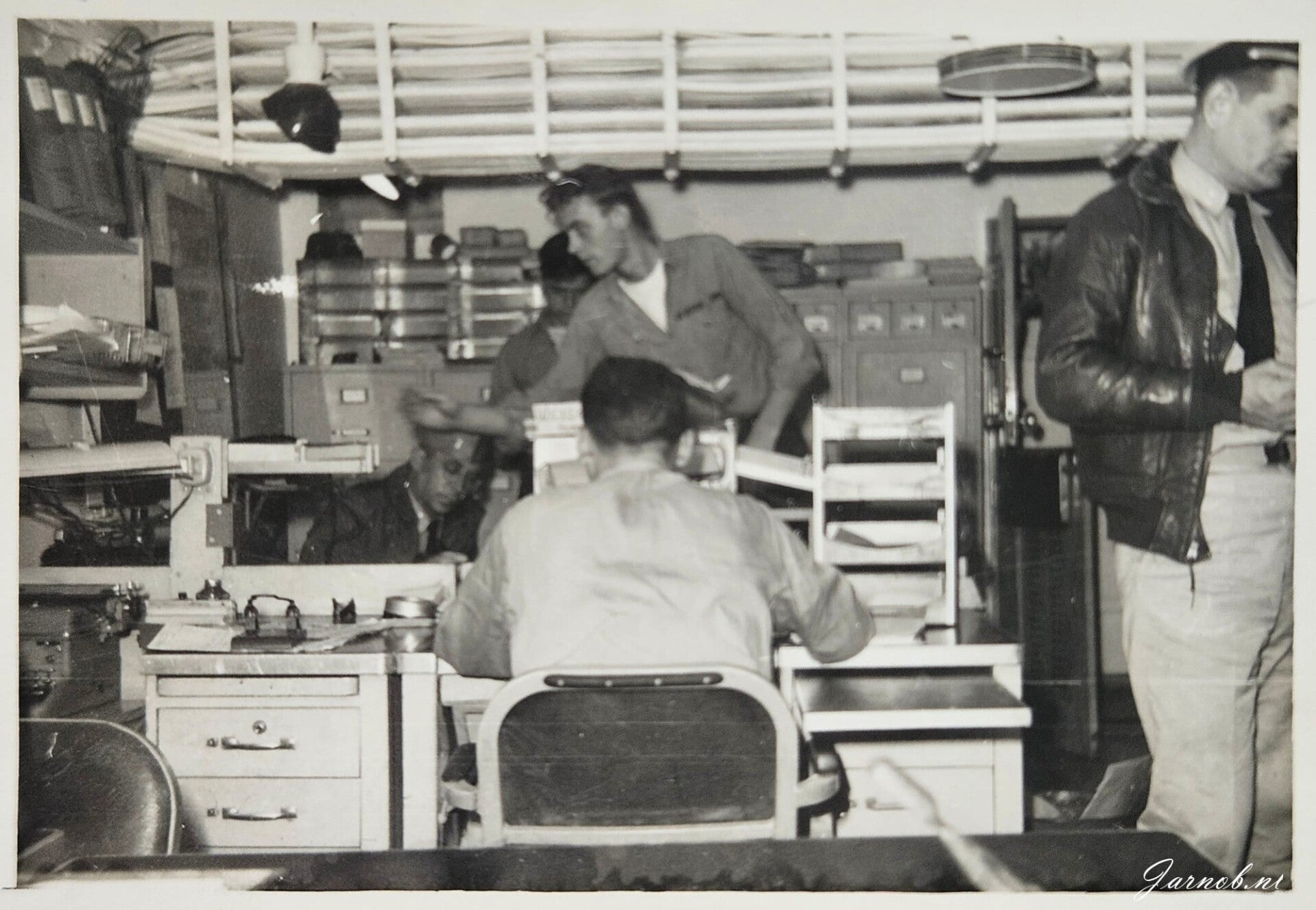
This photo has 'Weiske' standing in the middle behind his desk (seen from the rear), several high ranking officers. On the photographs black telephones and morse code machines can also be seen.
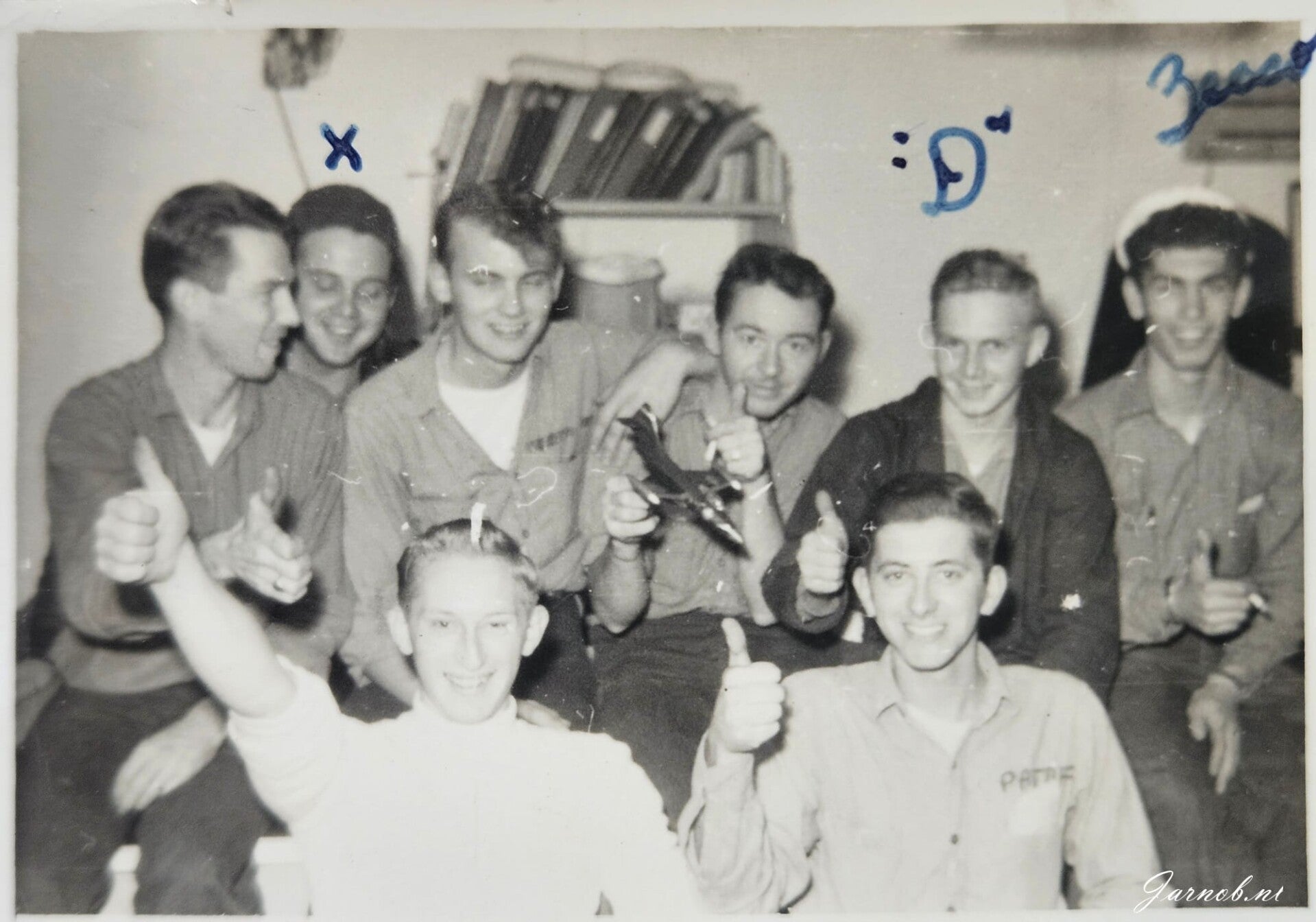
This photograph has written on the back 'Honey you'll probably think thats me (x) Burito nat' - Richards with his colleagues, smoking cigarettes and holding the F9F Panther scale model.
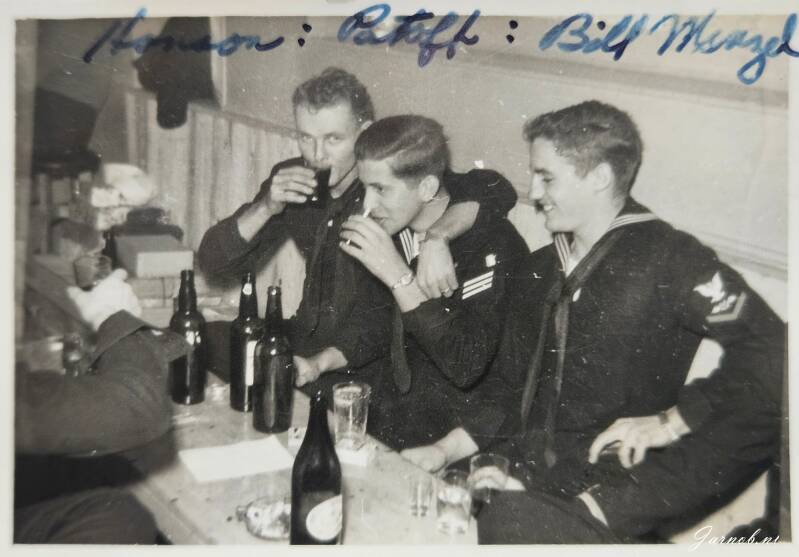
The photographs in the middle and on the right look like some sort of an official celebration.
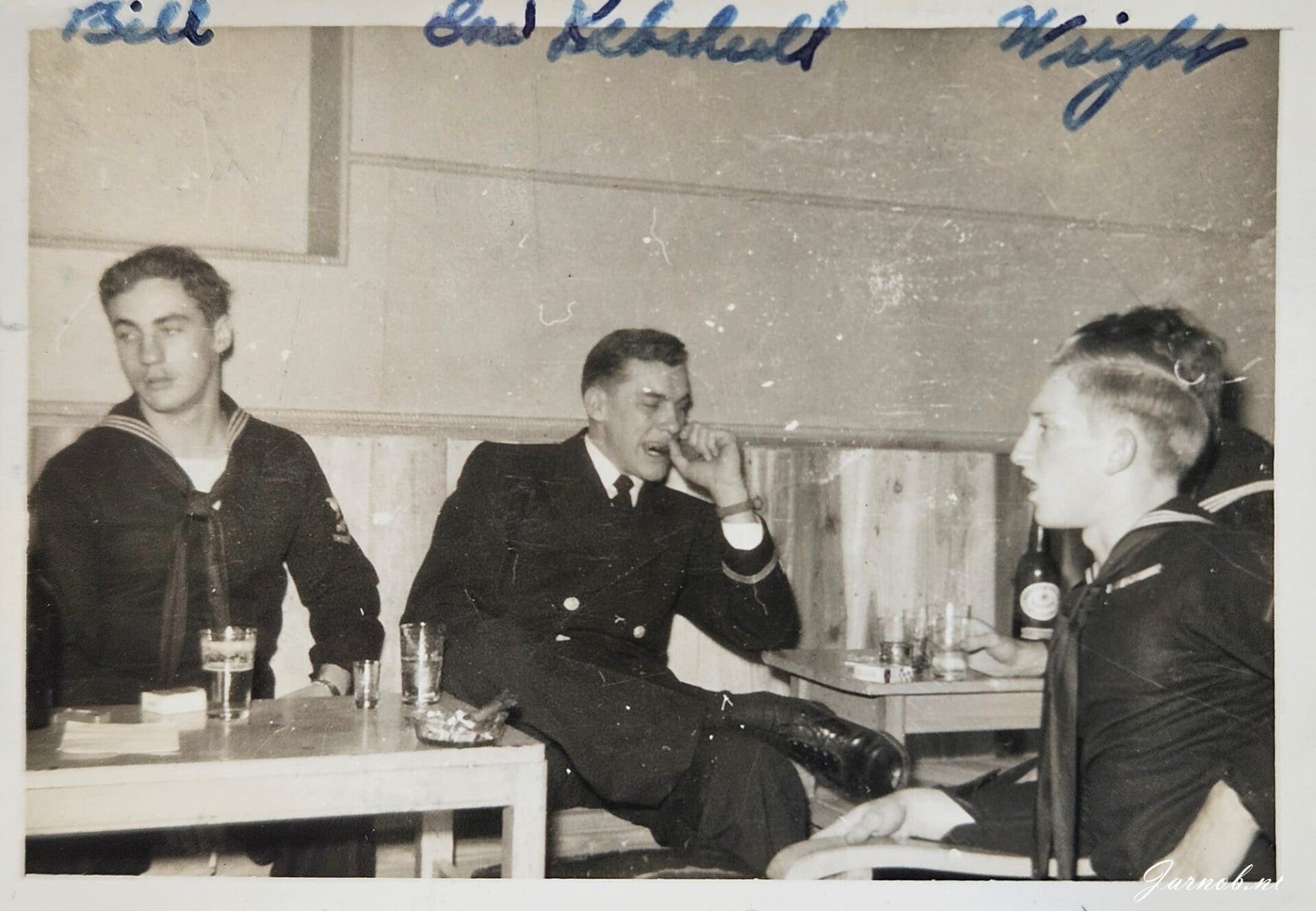
Interesting are their insignia's:'Hanson' and 'Patoft' are both Seaman, 'Bill Menzel' is a Petty Officer Third Class with Boatswain's insigina, 'Bob Keshell' has an Ensign marking on his sleeve.
General
CV-34 was named after the 1777 battle of Oriskany near New York during the American Revolution fought between the British and Americans which were both supported by native American tribes.
The USS Oriskany was a long-hulled version of the Essex-class carriers and the last one produced; forming the blue print for older Essex-class carrier upgrades. It earned battlestars during the Korean and Vietnam wars. In 1976 it was decommissioned and ordered te be scrapped - due to delays this did not occur so the US Navy bought the carrier back and in 2006 was sunk in the Gulf of Mexico to form the largest man made artificial reef.
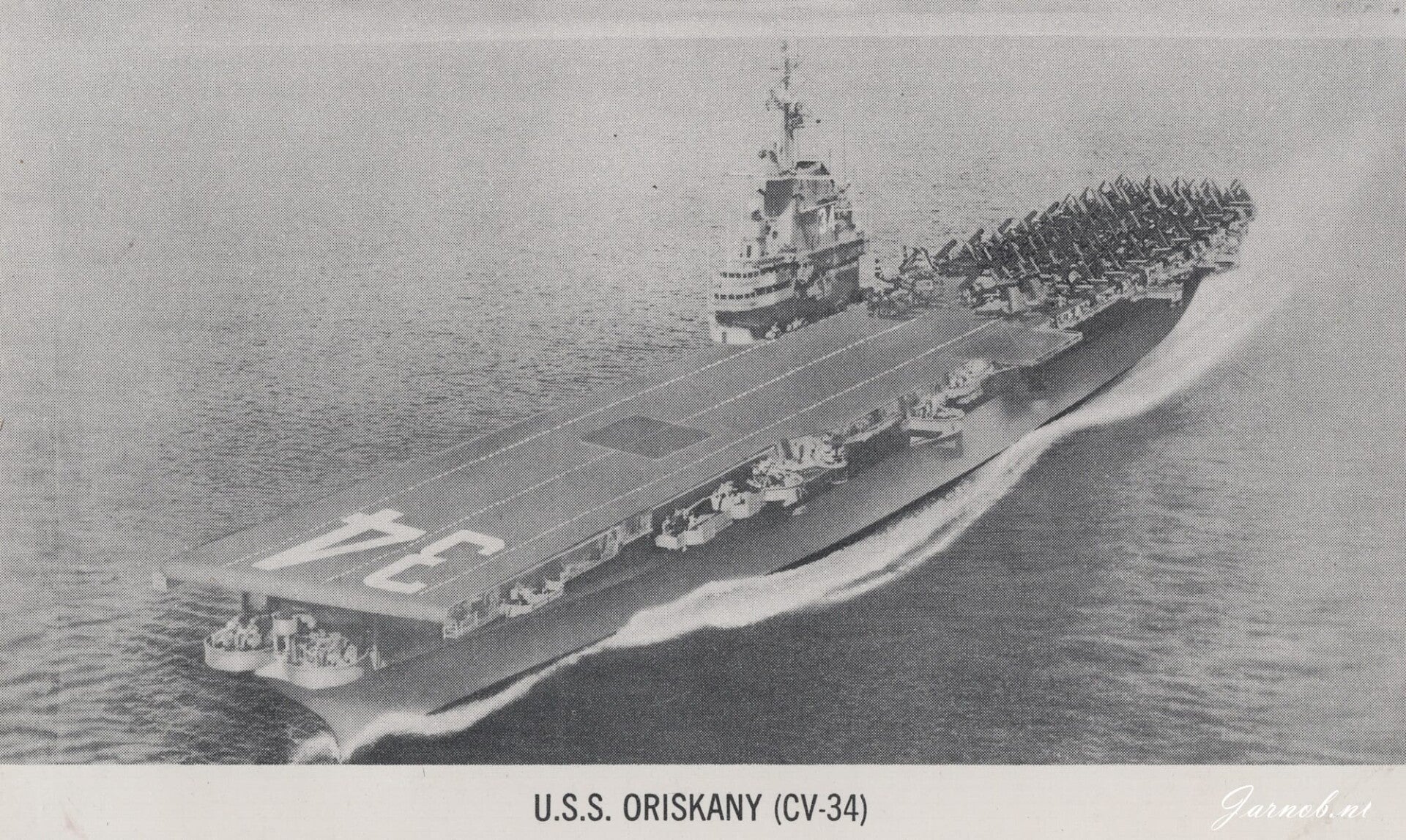
1st photo lot: Korean war combat cruise
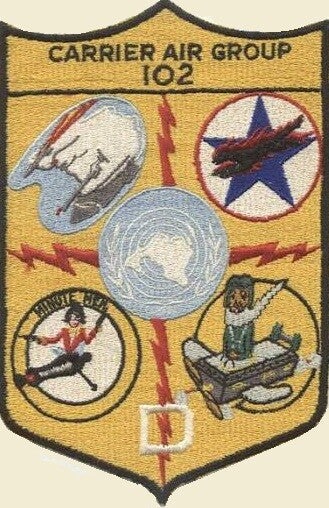
CV-34 USS Oriskany operated carrier air wing CVG-102 during this particular cruise (October 15th 1952 to May 18th 1953 ). It consisted of 4 aircraft squadrons, 4 aircraft squadron detachments and 1 helicopter squadron detachment. All regular squadrons were marked with tailcode 'D'.
- VF-781 “Pacemakers” operated the F9F-5 Panther jet aircraft.
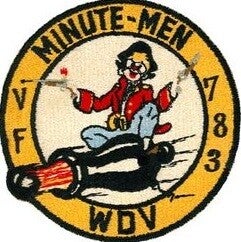
- VF-783 “Minute Men” operated the F9F-5 Panther jet aircraft.
- VF-874 "Moonshiners" operated the F-4U-4 Corsair.
- VA-923 “Rough Riders” used the sturdy AD-3/-4 strike bomber.
Detachments of special purpose aircraft from which not an entire squadron were needed were based aboard the USS Oriskany. All detachments of CVG-102 were designated Detachment-G and consisted of:
- F4U-5N Corsair night fighters (VC-3 “Blue Nemesis”, tailcode 'NP')
- F-2H-2P Banshee photo reconnaissance (VC-61 “Eyes of the Fleet”, tailcode 'PP')
- AD-4N night attack aircraft (VC-35 “Night Hecklers”, tailcode 'NR')
- AD-3W aircraft airborne early warning (VC-11 “Early Eleven”, tailcode 'ND')
- HO3S-1 rescue helicopters (HU-1 “Pacific Fleet Angels”, tailcode 'UP')
VF-781 “Pacemakers”
VF-781 was established on the 1st of July, 1946 flying F-6F Hellcats. For some years it would fly F4U Corsairs before transferring to F-9F Panthers. The unit would make combat cruises during the Korean war and (much later) became famous for a large Panther-MiG15 encounter (flown by Russian pilots) during which one of the VF-781 pilots shot down 4 MiG15’s.
After the Korean war ended VF-781 was renamed VF-121 and would remain in the Asian theatre. In the years to come it would transfer to the F-9F-8 Cougar, FJ-3 Fury, F-3H Demon and F-11F Tiger. During its final years VF-121 would be flying F-4B and later F-4J Phantoms. VF-121 was used to form the base of a new US Navy fighter pilots school – later known as Top Gun. In 1971 VF-121 was officially disbanded.
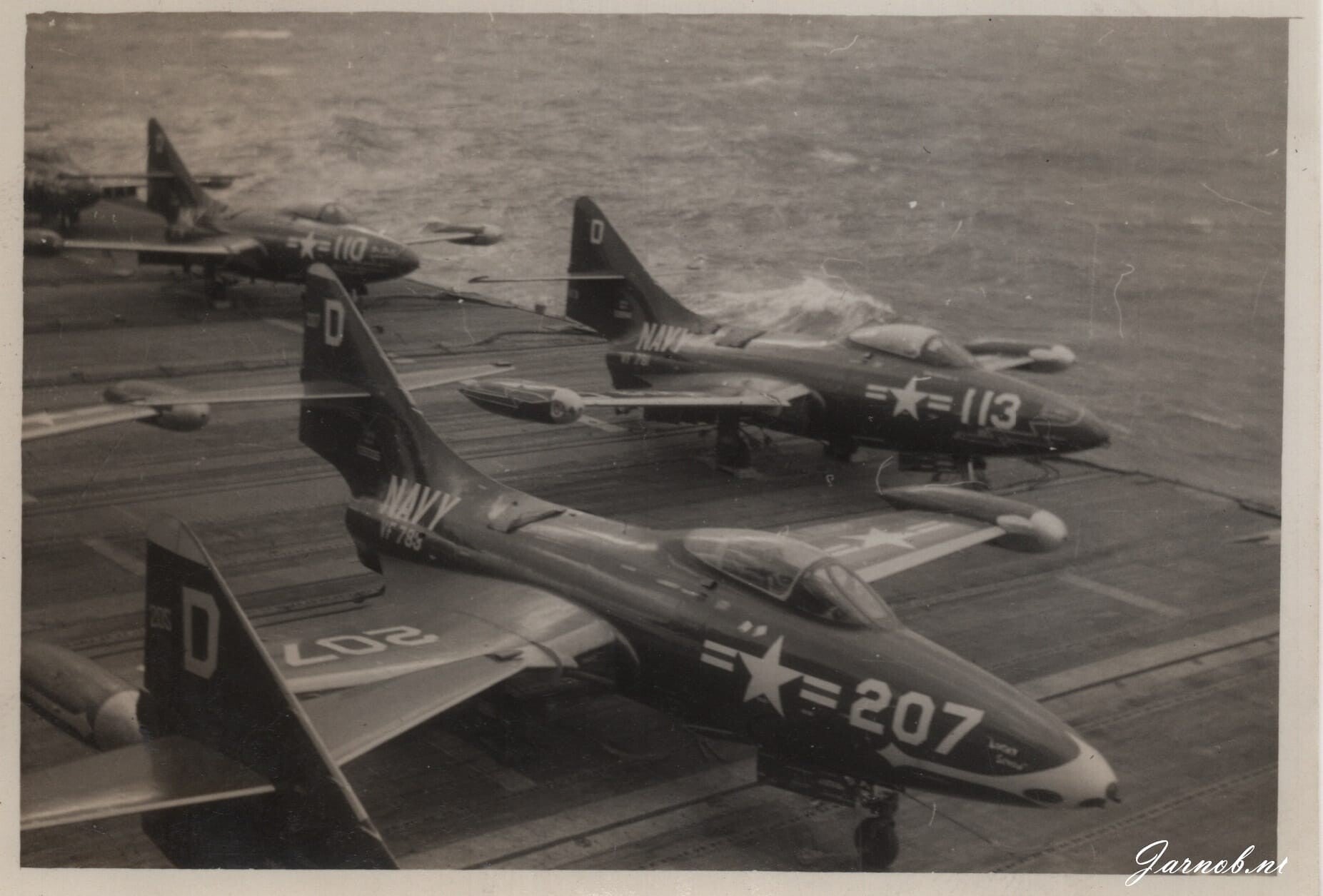
F-9F Panthers of VF-781 (110/D, 113/D) and VF-783 (205/D, 207/D) on the flightdeck of the USS Oriskany. The 207 is named "Lucky Seven" - the others also have names/ symbols but are unreadable. All wings are unfolded in an active operational status.
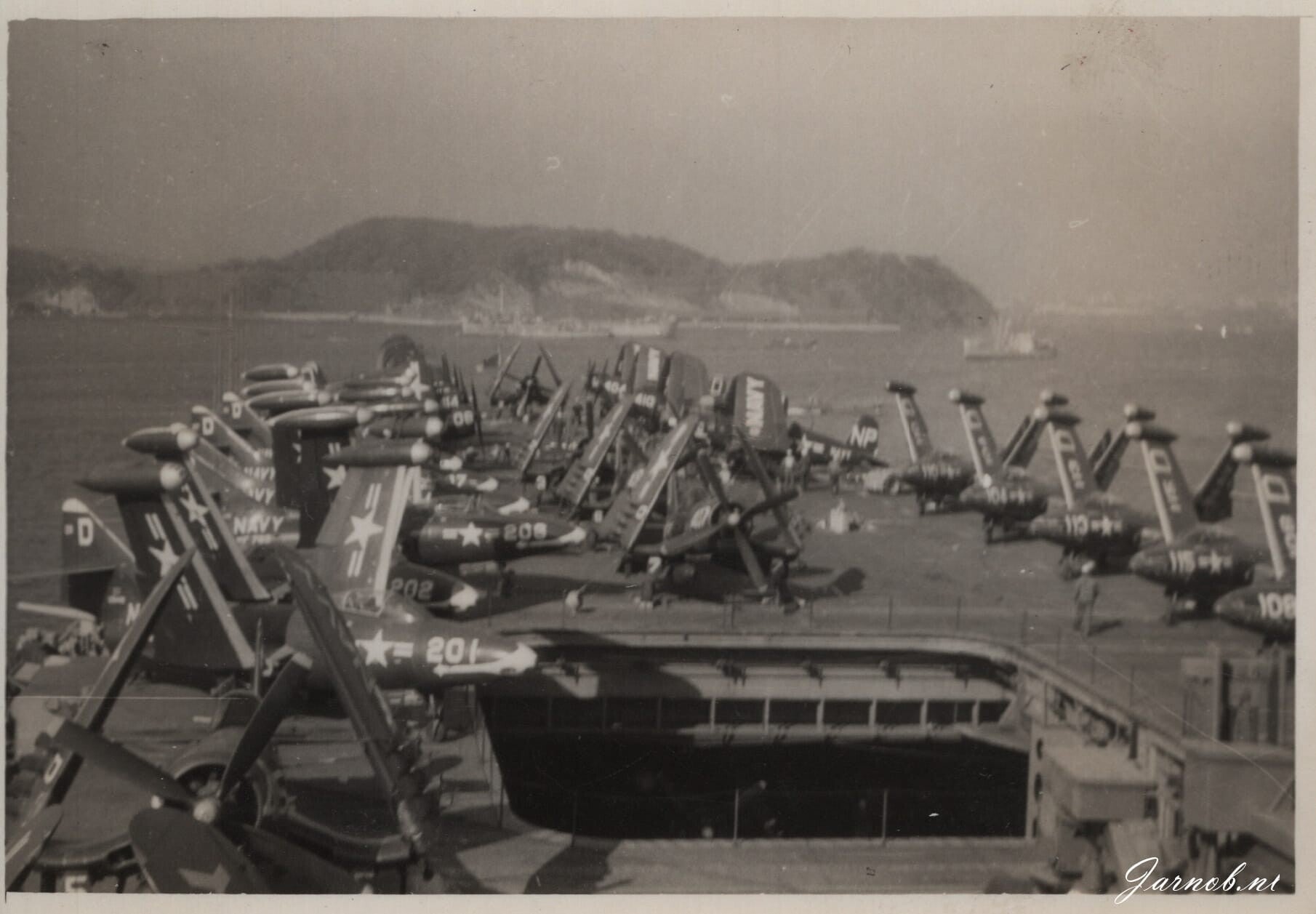
Huge number of aircraft on the flightdeck stowed together near a friendly harbor (most likely Japan). Visible aircraft are F-9F Panthers of VF-783 (201/ 202/ 206/ 207) and VF781 (104/ 110/ 113/ 115/ 108), F-4U Corsairs of VF874 (408/ 407/ 410/ 414) and a F-4U-SN of VC3.
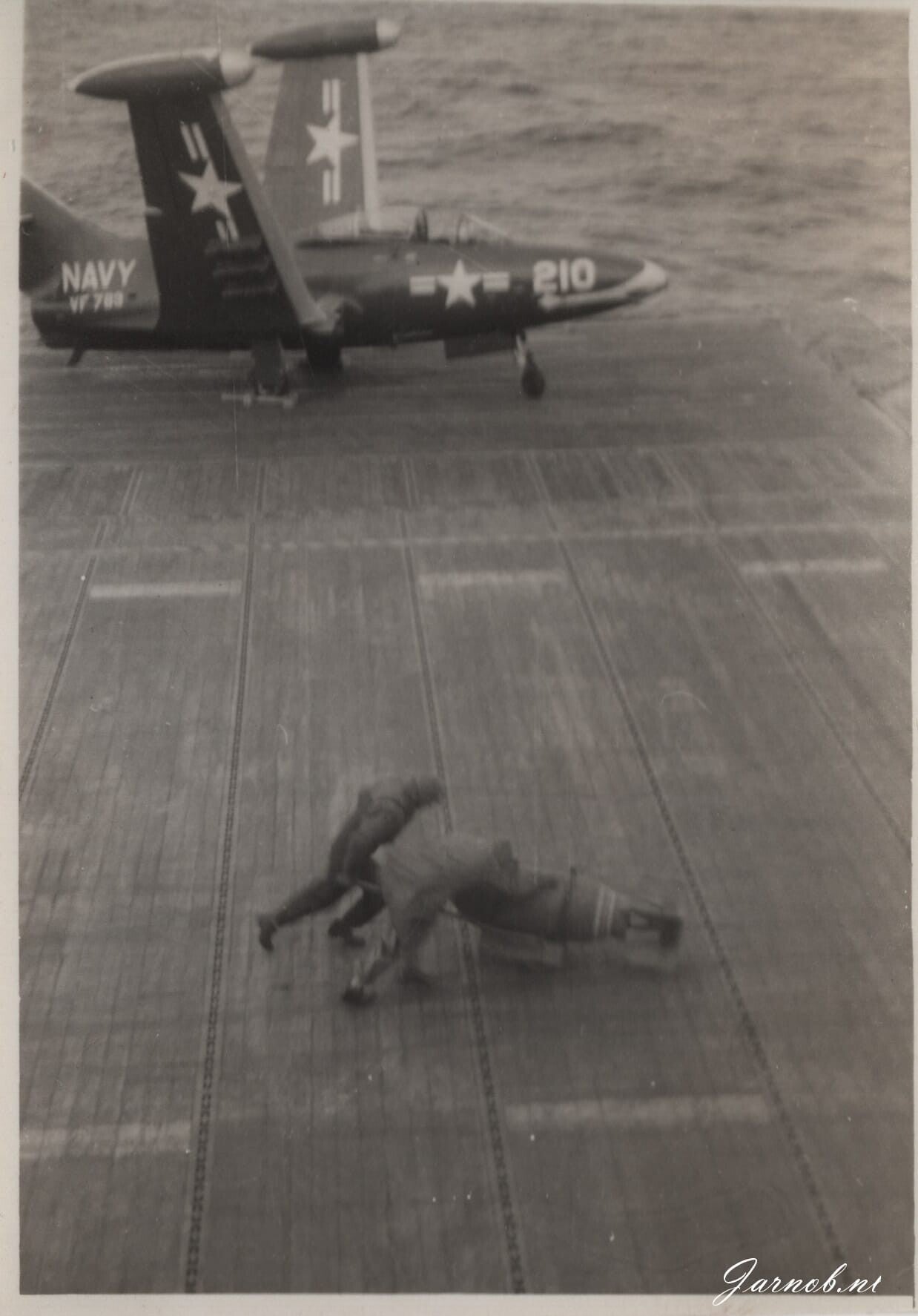
F-9F Panther VF-783 210/D sits in the background while crewmen push a 1000lb bomb across the deck.
VF-783 “Minute Men”
This squadron was established in 1950 flying F-4U Corsairs, the next year it made its first combat cruise during the Korean war. The next year VF-783 transferred to the F-9F Panther and made its second combat cruise – this time with the USS Oriskany.
After the war VF-783 was renamed VF-122 “Black Angels” and transferred to the F-9F-8 Cougar. During its final years it was flying the F3H Demon before being disbanded in 1958.
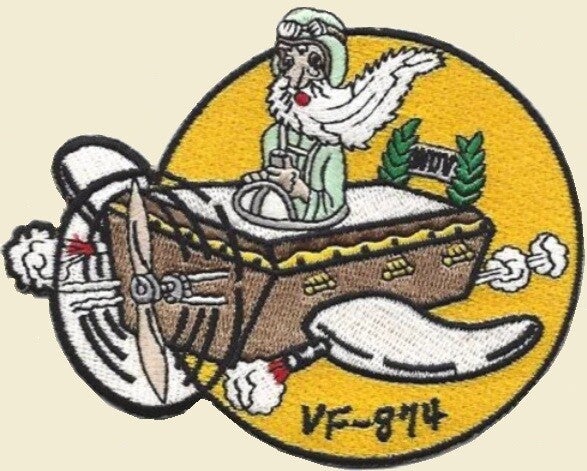
VF-874 “Moonshiners”
Just like VF-783 this squadron was only active for a short period. Activated in 1950 it would fly F4U Corsairs during two Korean war combat cruises. After the war it as renamed VF-124 “Stingarees”and flew the F9F Panther, F7U Cutlass and F3H Demon before being disbanded in 1958.
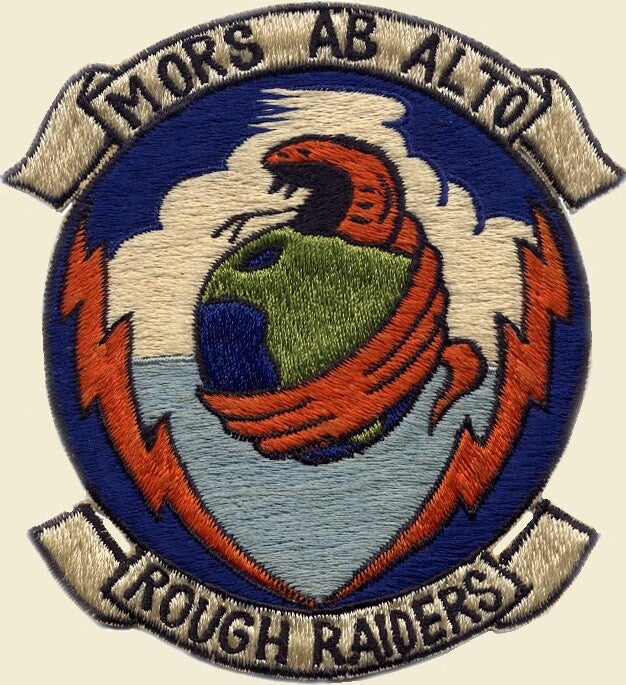
VA-923 “Mors Ab Alto”(Death from Above)/ “Rough Raiders”
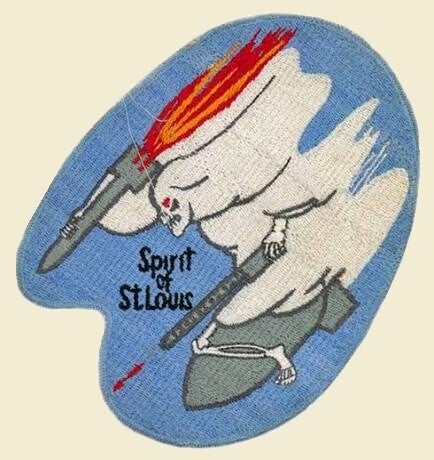
VA-923 was originally activated as reserve unit VA-55E in 1946 and became active in 1950 when it was redesignated VA-923. The squadron first flew TBM Avengers and AM Maulers before it became VA-923 flying AD-2 Skyraiders. During the follow up years VA-923 would fly many Skyraider AD-2/-3/-4/-6 and -7 subtypes. During the Korean war VA-923 participated in two combat cruises. After the war it was redesignated VA-125 and was eventually disbanded in 1958.
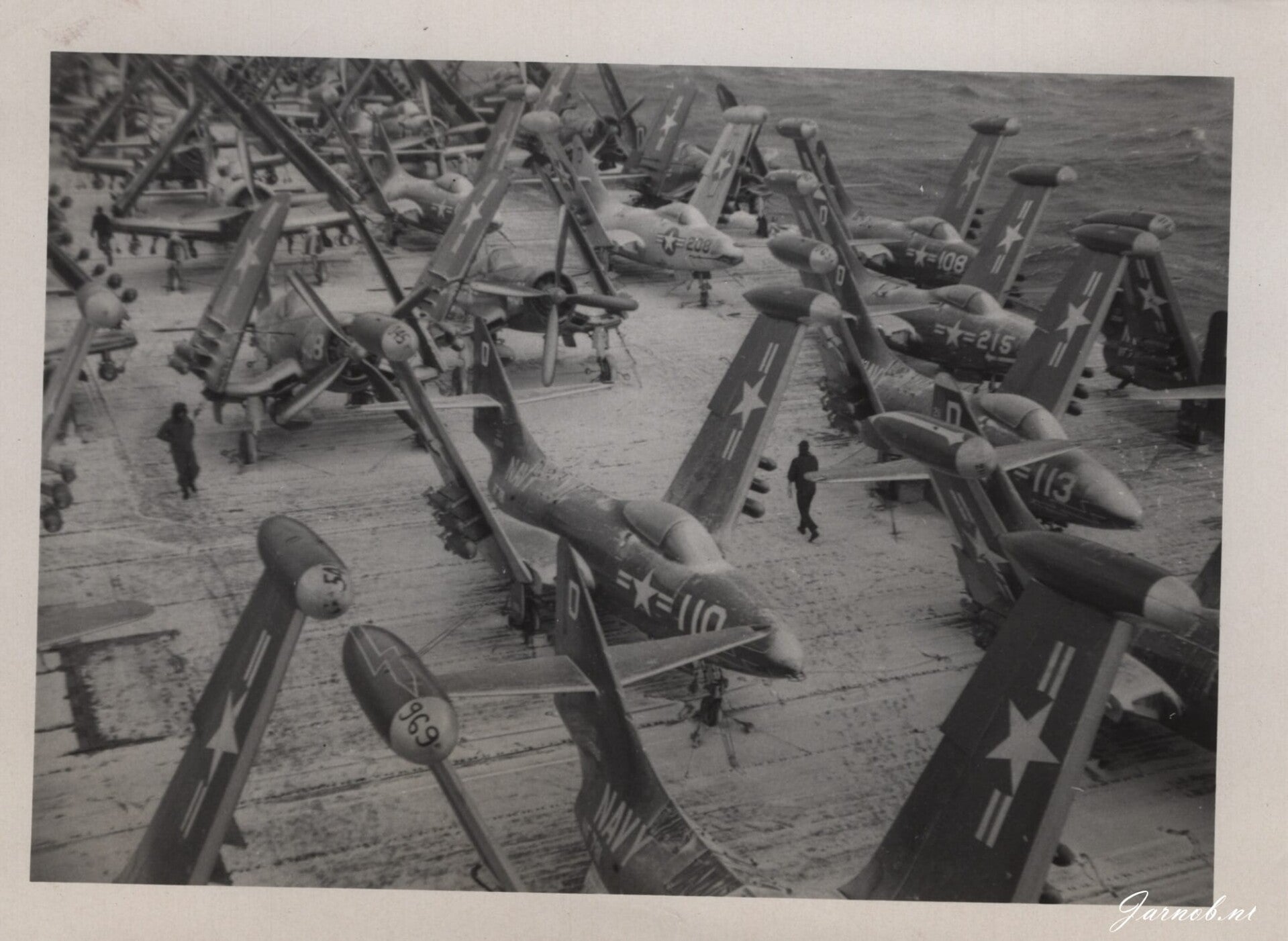
A large number of aircraft on deck during extreme icy conditions. All have folded wings - with bombs hung under them!
Visible are F9F Panthers VF781 (108/ 110/ 113) and VF783 (208/ 215) and F-4U Corsairs VF874 (401/ 408/ 413). F9F 208/D has the experimental metallic c/s.
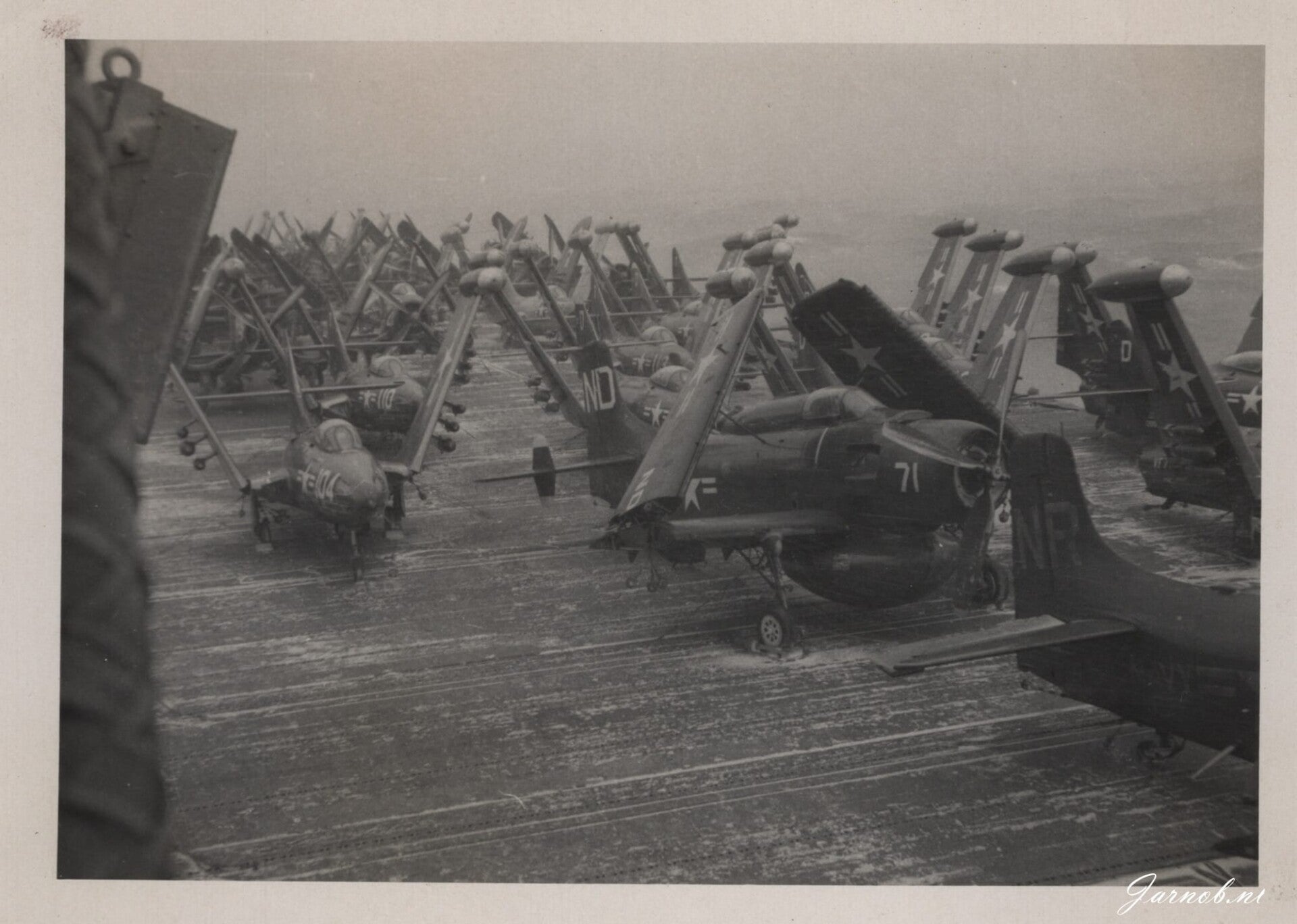
On the same icy flightdeck stands a VC-11 AEW&C AD-4W (71/ND) and in front of it a VC35 AD-4N (_/NR) Night strike bomber. Behind it many F9F Panthers, F4U Corsairs and AD4 Skyraiders of all other squadrons.
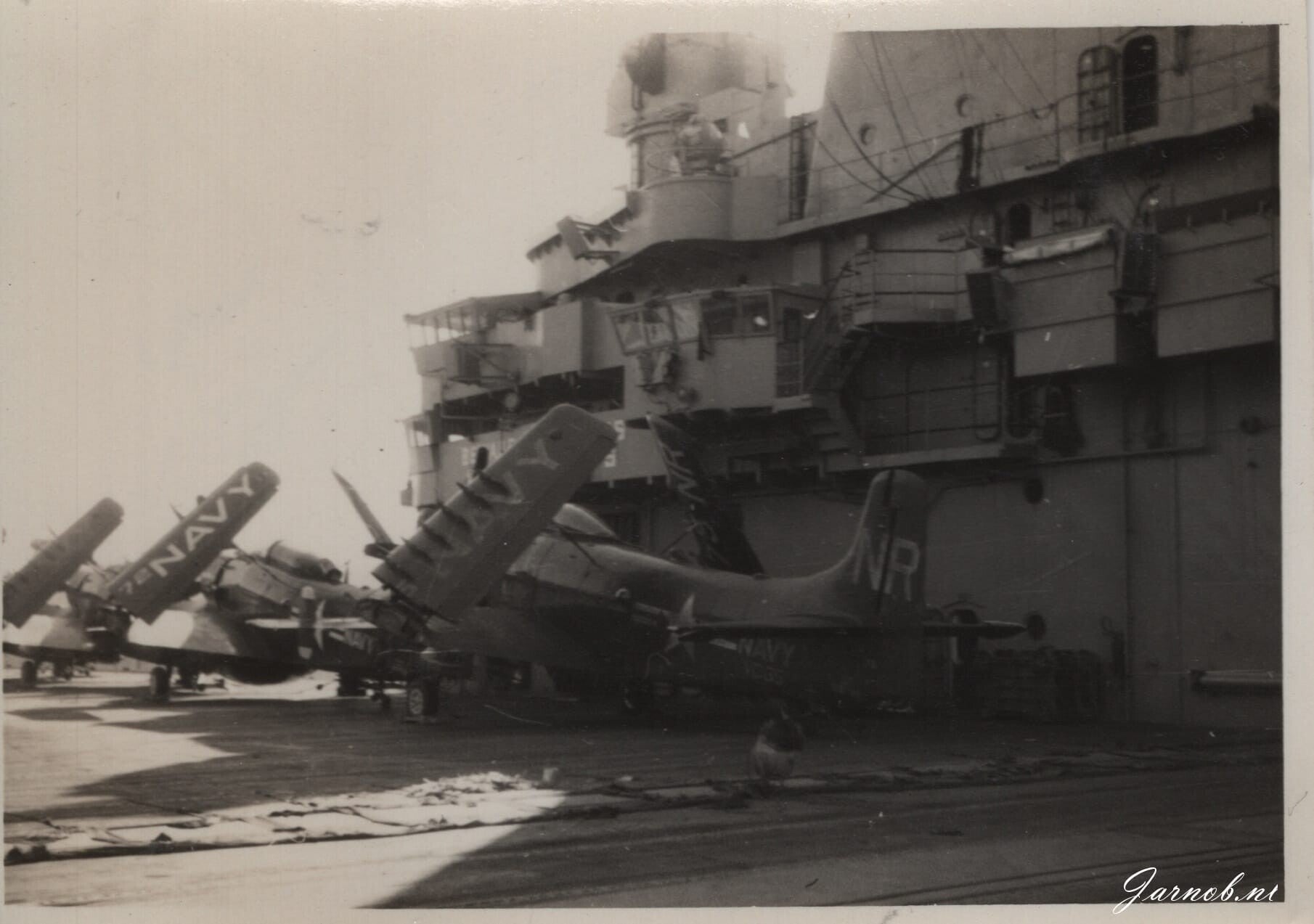
VC-35 "Night Hecklers" AD-4N night-/all-weather strike bomber with toned down markings 'NR'. Standing before is an AD-4W AEW&C aircraft of VC-11 "Early Elevens" no. 72/ND.
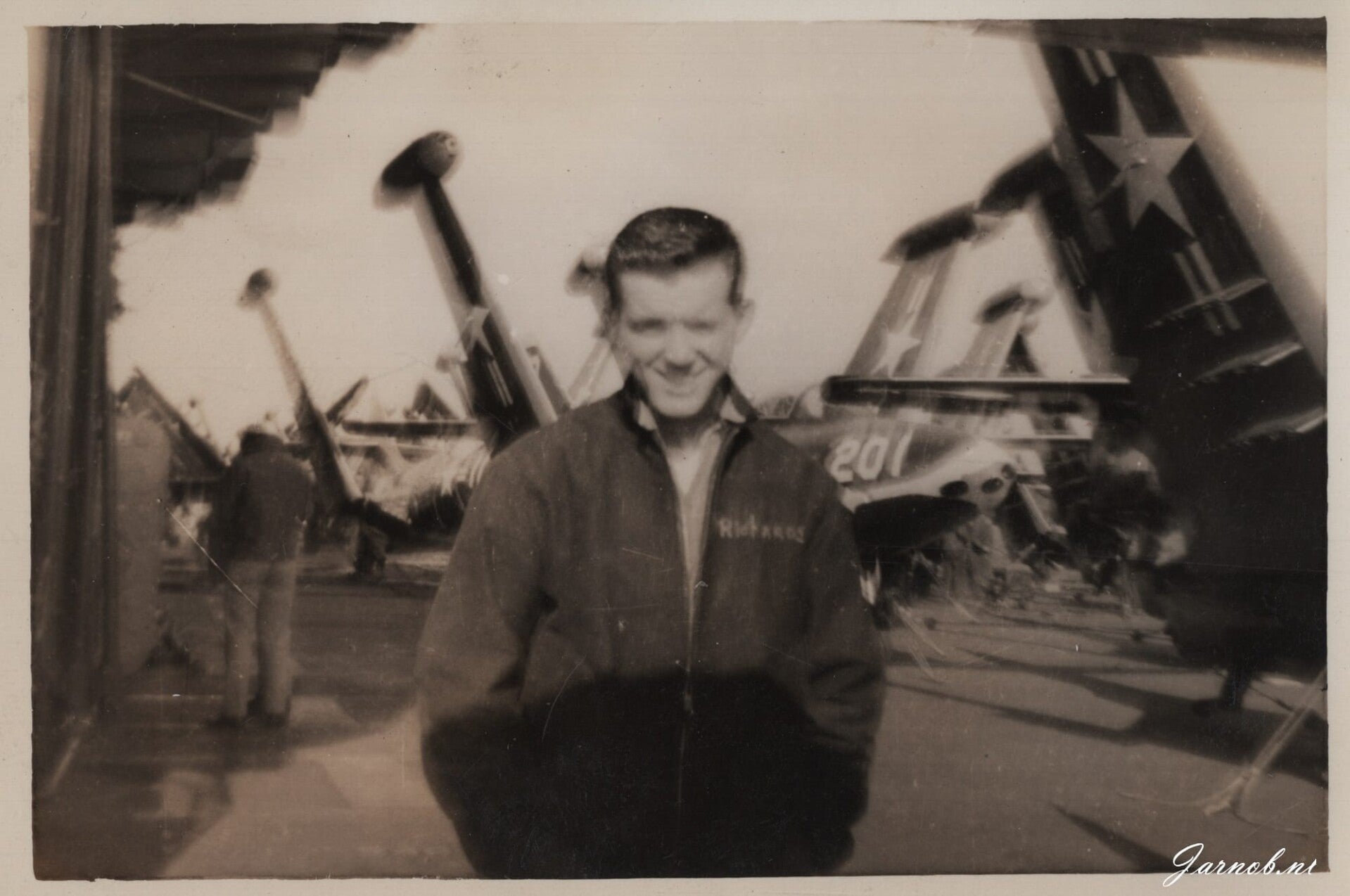
Richards posing on the flightdeck between the F9F Panthers.
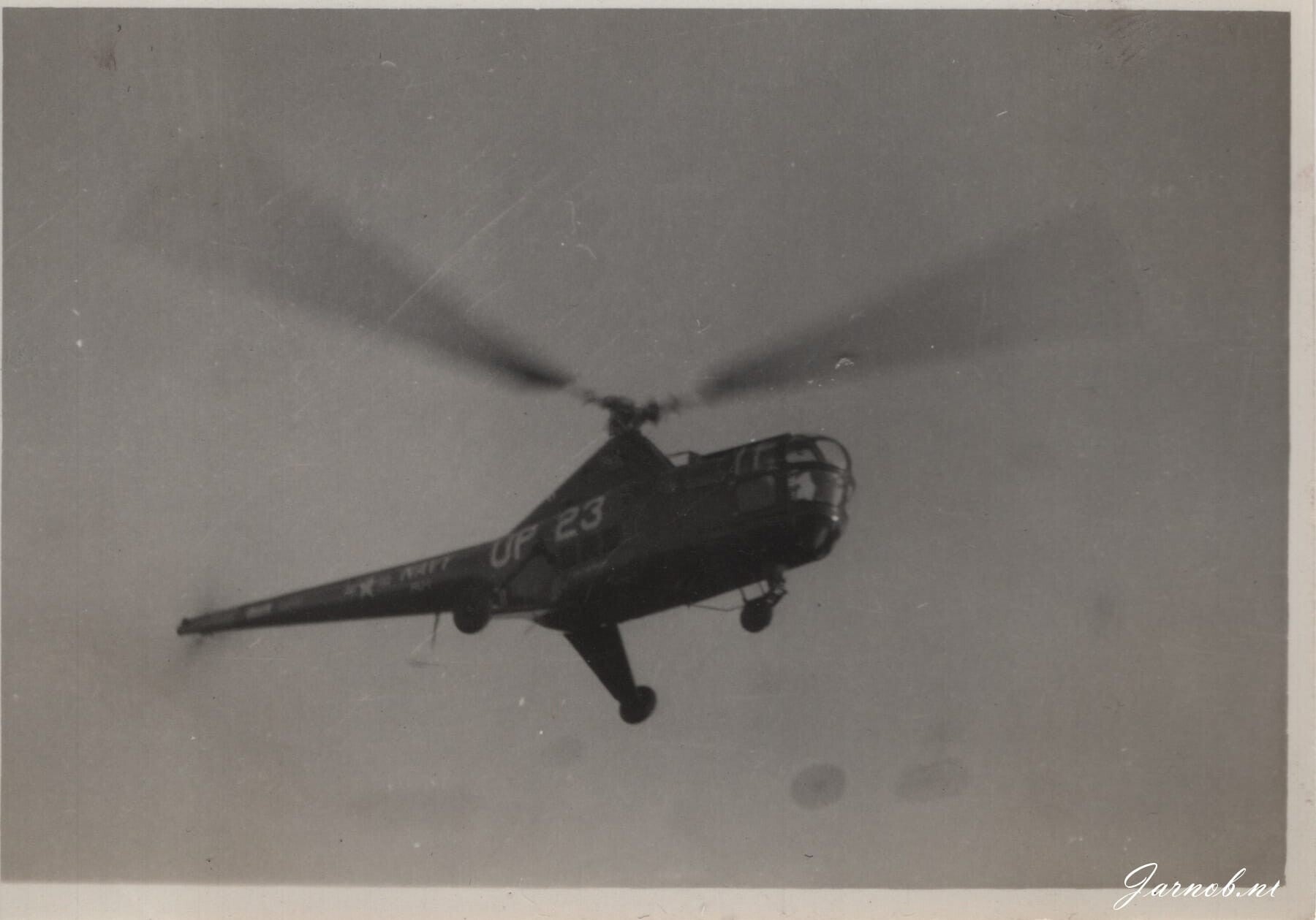
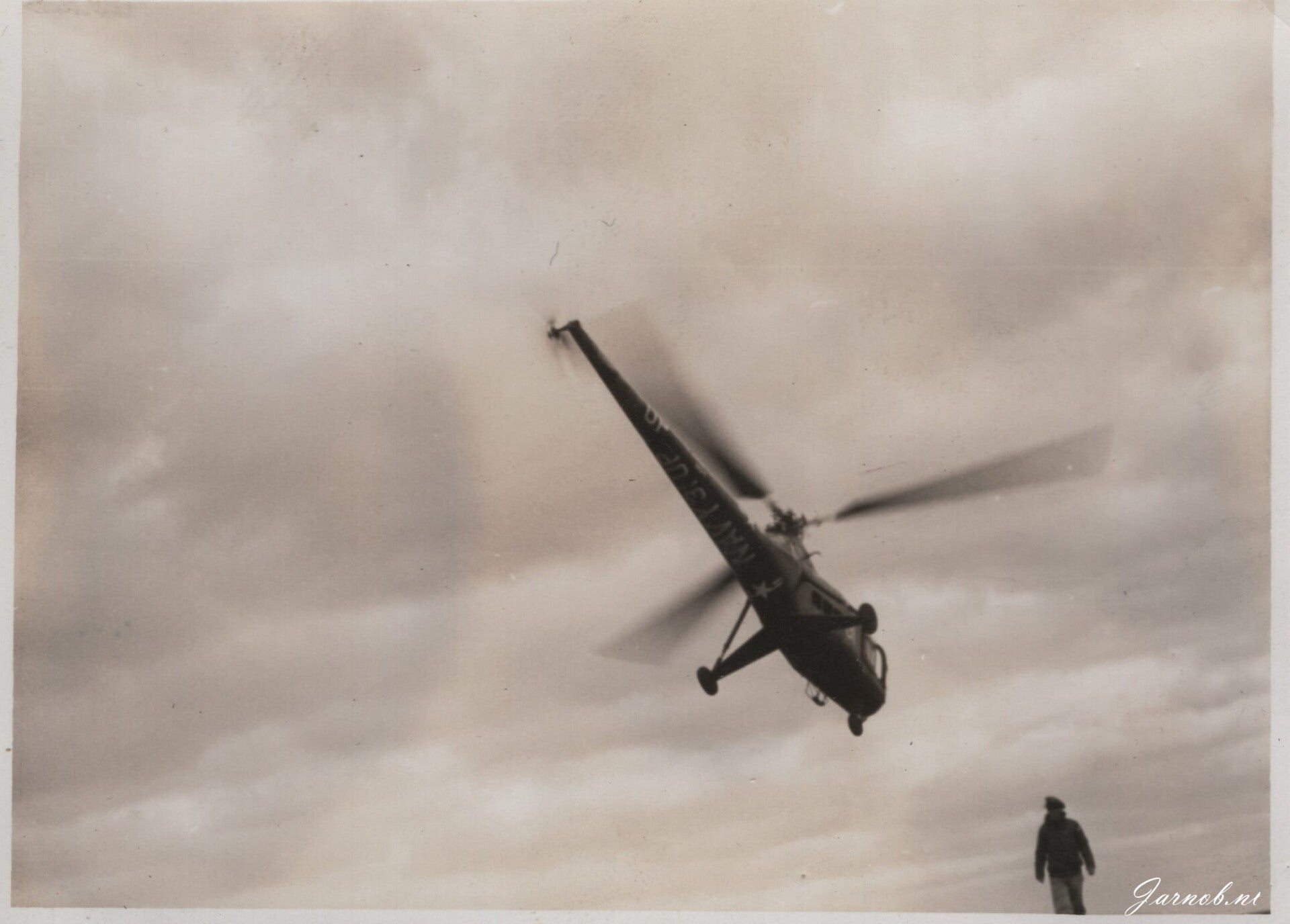
Two photographs of a Sikorsky HO3S-1 SAR helicopter of the HU-1 "Pacific Fleet Angels" detachment-G; no.s 23/UP and 31/UP.
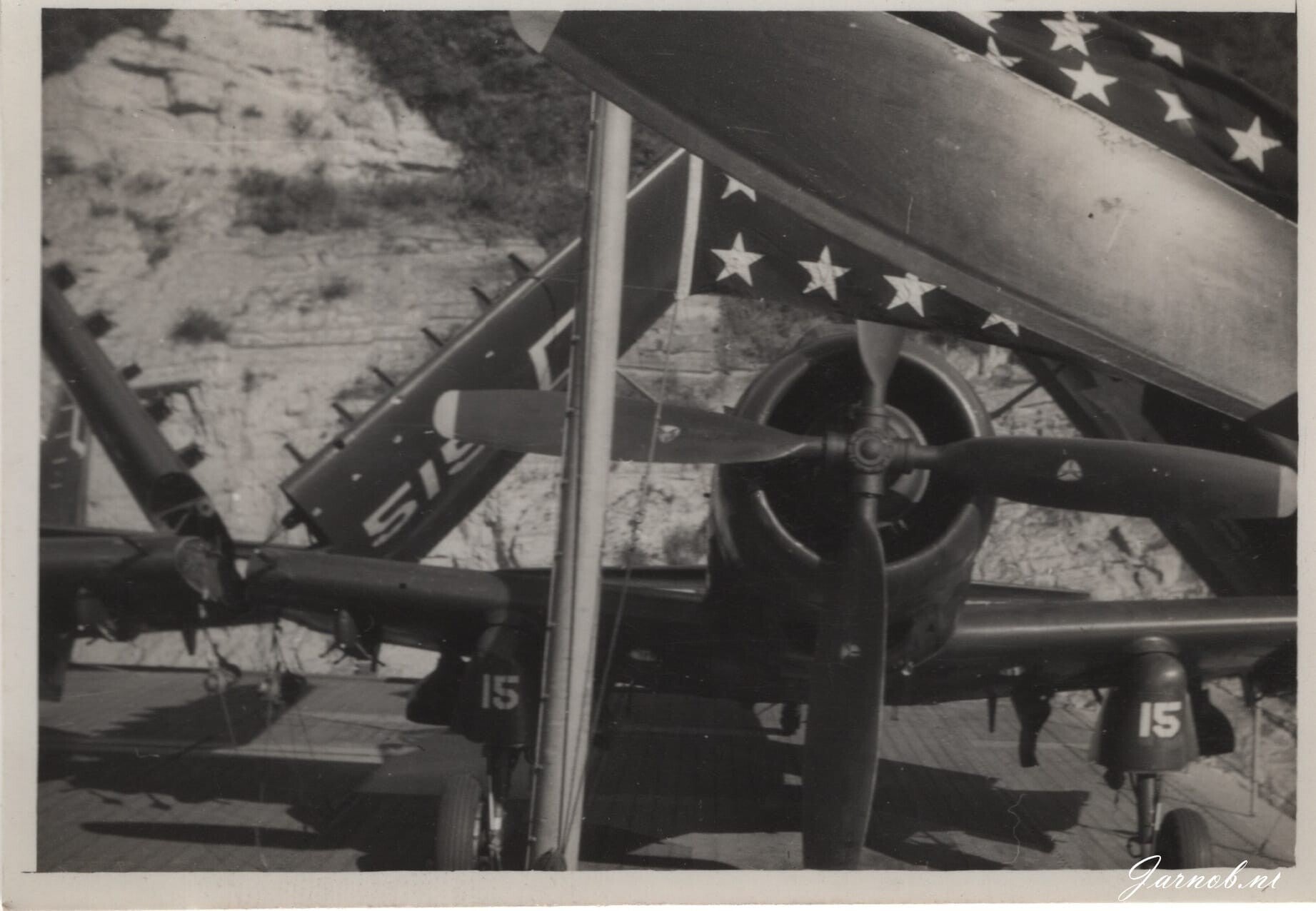
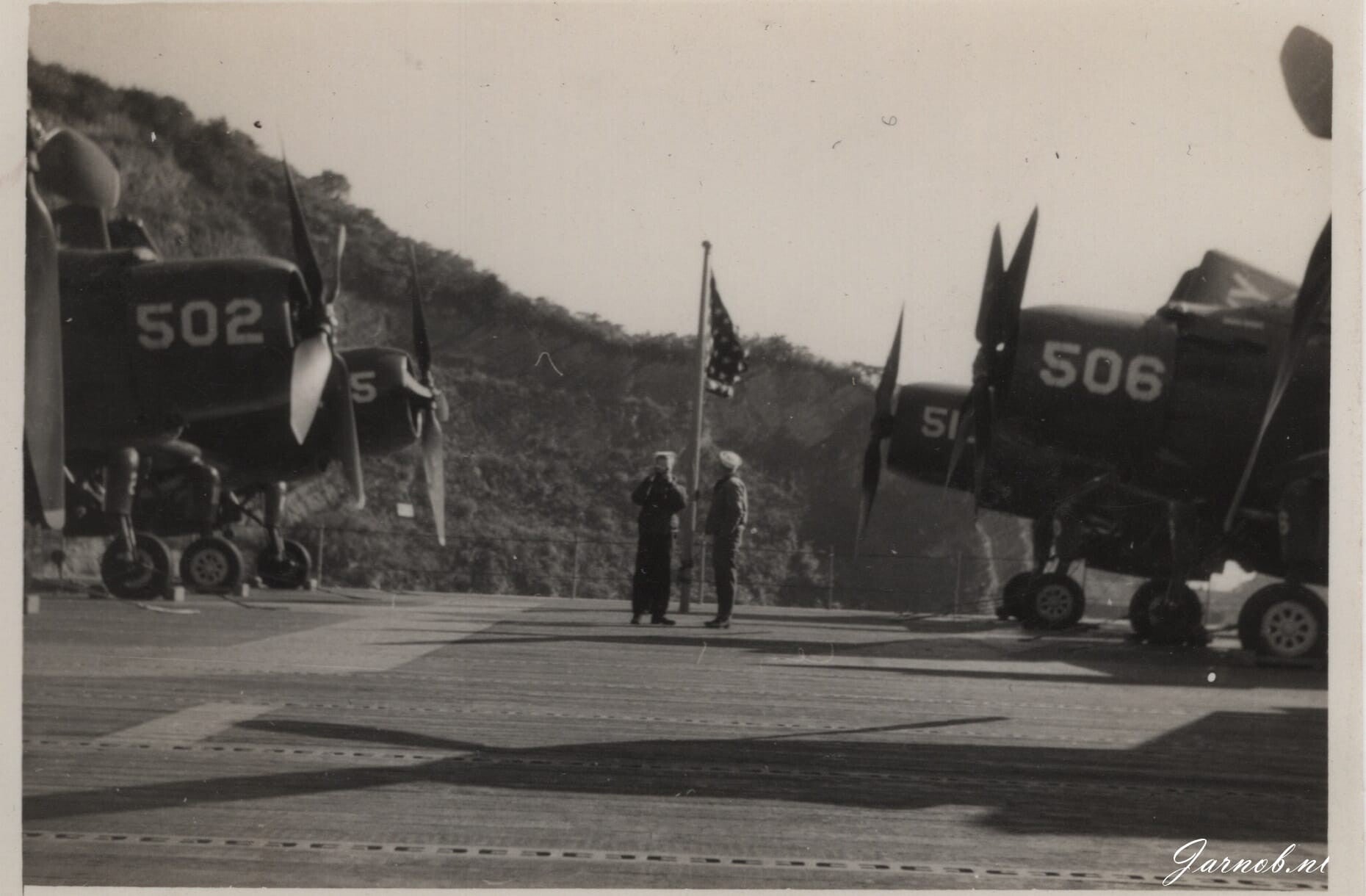
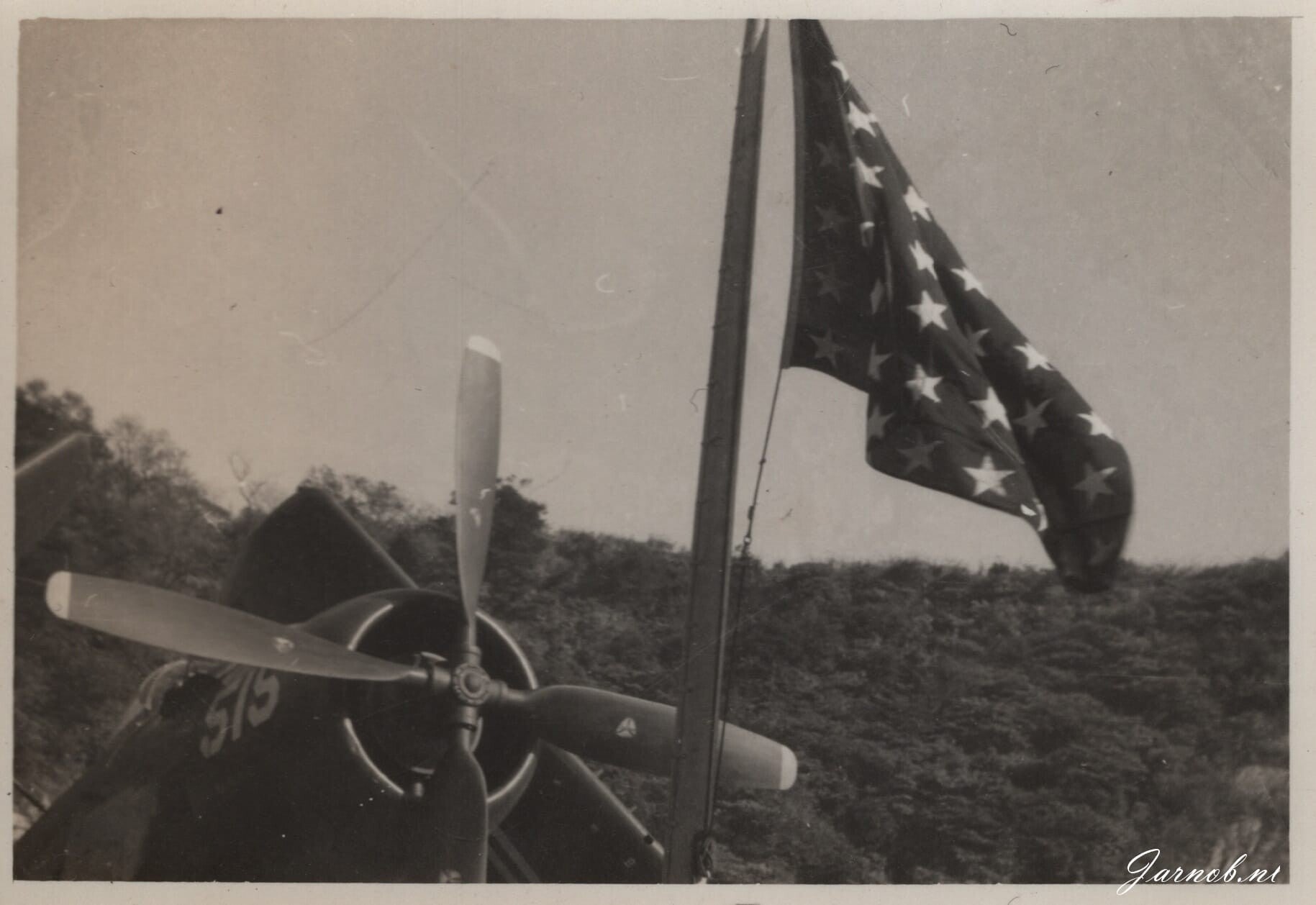
Three photographs of AD-4 Skyraiders (502/ 506 /515) of VF-874 "Moonshiners"on the front flightdeck, most likely during R&R / Repair in Japan. With close ups of the Union Jack (US Navy Jack) at the bow.
Several major events occured during the USS Oriskany's Korean combat cruise - due to the large number of photographs please click the link below to be directed to these special photo reports!:
2nd photo lot: Korean area peace keeping cruise
CV-34 USS Oriskany operated carrier air wing CVG-19 during this particular cruise (September 14th 1953 to April 22nd 1954 ). It consisted of 4 aircraft squadrons, 4 aircraft squadron detachments and 1 helicopter squadron detachment. All regular squadrons were marked with tailcode 'B'.
-
- VF-191 “Satans Kittens” operated the F9F-6 Panther jet aircraft.
- VF-192 “Golden Dragons” operated the F9F-5 Panther jet aircraft.
- VF-193 “Ghost Riders” flew the new F2H-3 Banshee.
- VA-195 “Tigers” used the sturdy AD-6 Skyraider strike bomber.
Detachments of special purpose aircraft from which not an entire squadron were needed were based aboard the USS Princeton. All detachments of CVG-19 were designated Detachment-E and consisted of:
- F2H-3 Banshee night fighters (VC-3 “Blue Nemesis”, tailcode 'NP')
- F-9F-2P Panthers photo reconnaissance (VC-61 “Eyes of the Fleet”, tailcode 'PP')
- AD-4NL night attack aircraft (VC-35 “Night Hecklers”, tailcode 'NR')
- AD-4W aircraft airborne early warning (VC-11 “Early Eleven”, tailcode 'ND')
- HO3S-1 rescue helicopters (HU-1 “Pacific Fleet Angels”, tailcode 'UP')
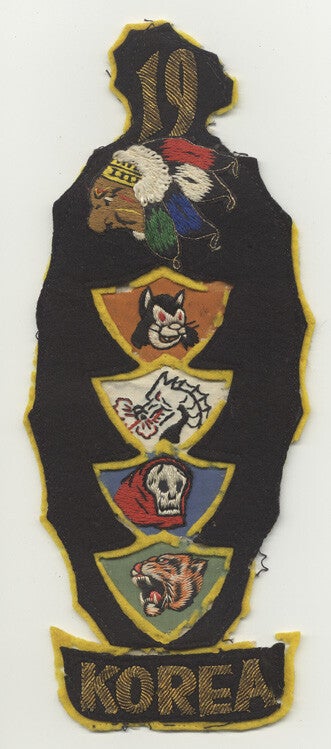
CVG-19 was the same Carrier Air Wing which operated out of the USS Princeton some years before - see the webpage CV-37 USS Princeton for details about the squadrons!
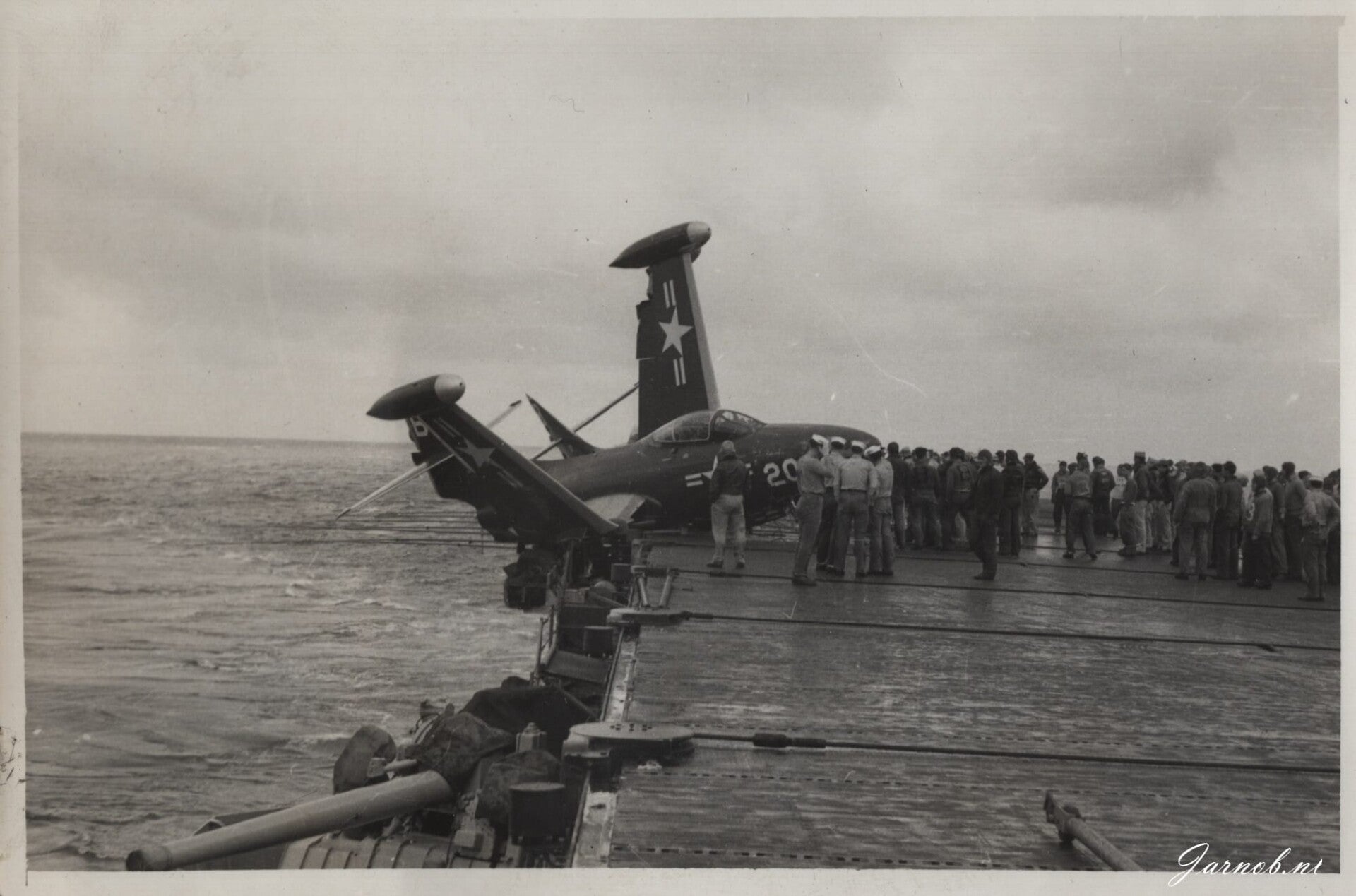
Somehow These two F9F Panthers of VF-192 "Golden Dragons became partially hung over the side of the flightdeck.
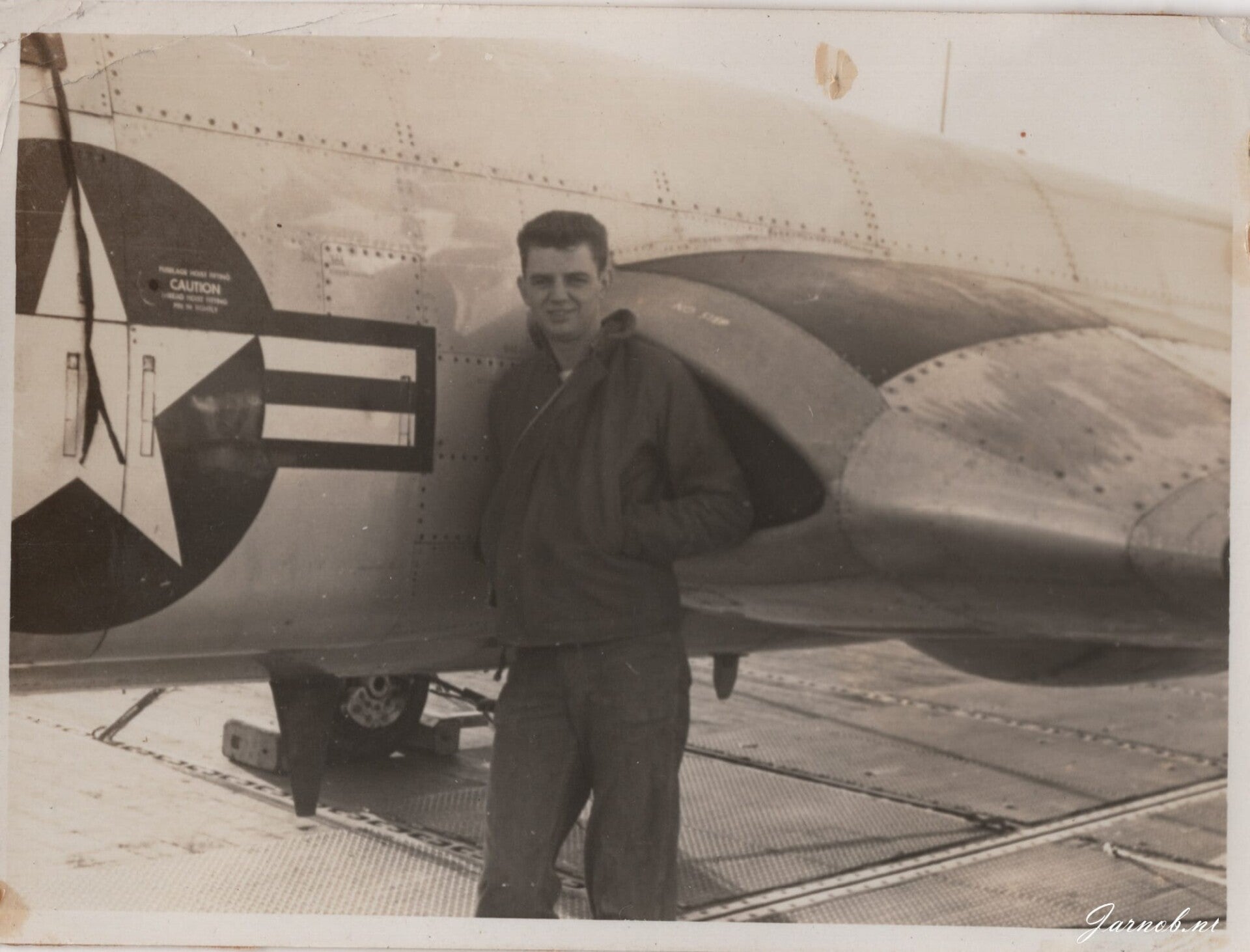
Richards in front of a new fighter type: the F2H Banshee.
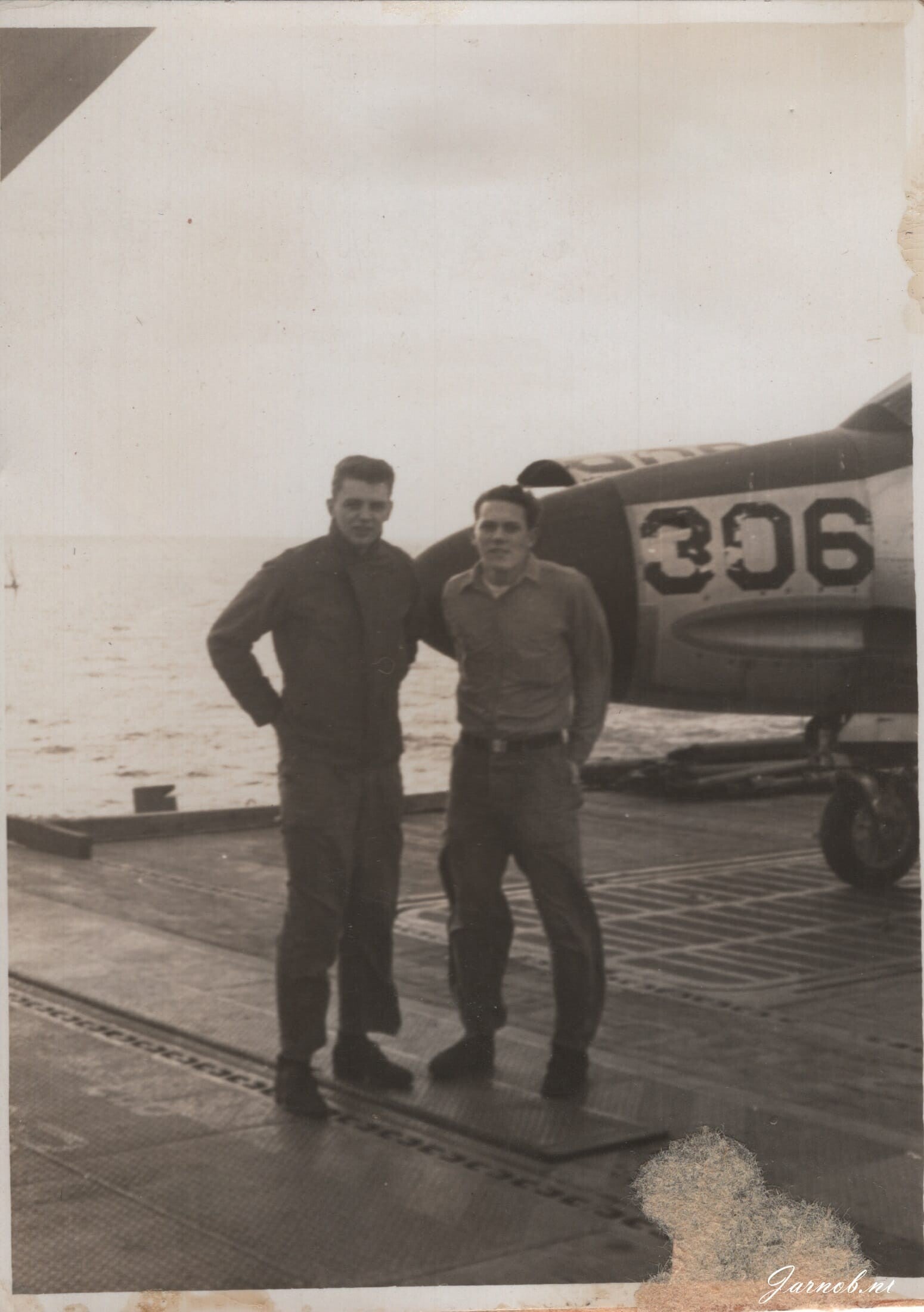
Richards with a colleague in front of F2H Banshee no. 306/B of VF-193 "Ghost Riders".
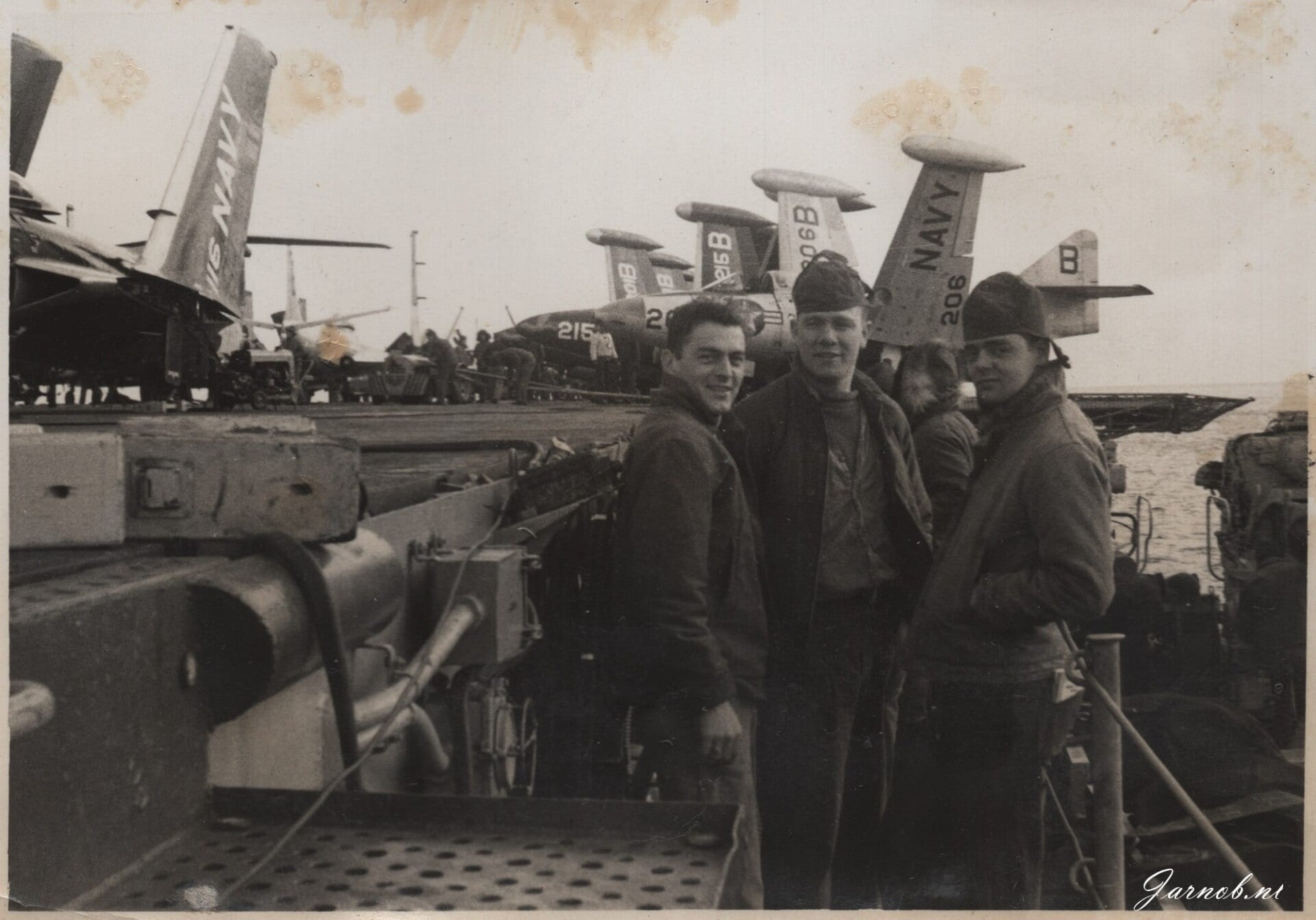
Richards woth colleagues on the flightdeck;l several aircraft can be seen: F9F Panthers 206/B, 201/B and 215/B of VF-192 "Golden Dragons" (dragons painted on nose). To the left a F9F Panther 116/B of VF-191 "Satans Kittens" without its wingtip fueltanks.
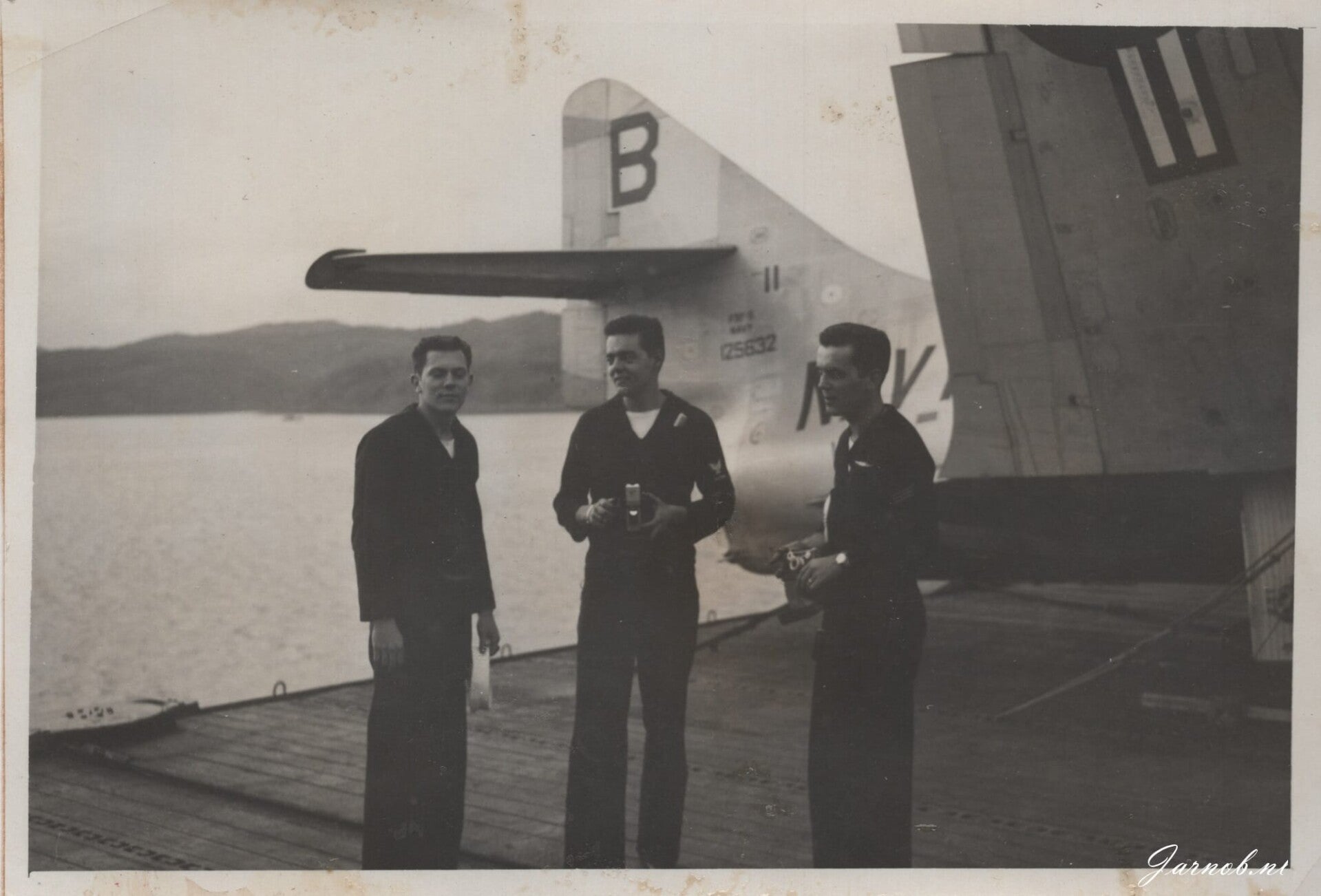
Richards (centre) holding a camera with two colleagues - the one on the right looks like Weiske, holding a camera. In front of a F9F Panther bu.no. 125632/B - in the 'experimental' metallic c/s.
Other events occured during this USS Oriskany's cruise - due to the large number of photographs please click the link below to be directed to these special photo reports!: