

CV-36 USS Antietam - Korean war
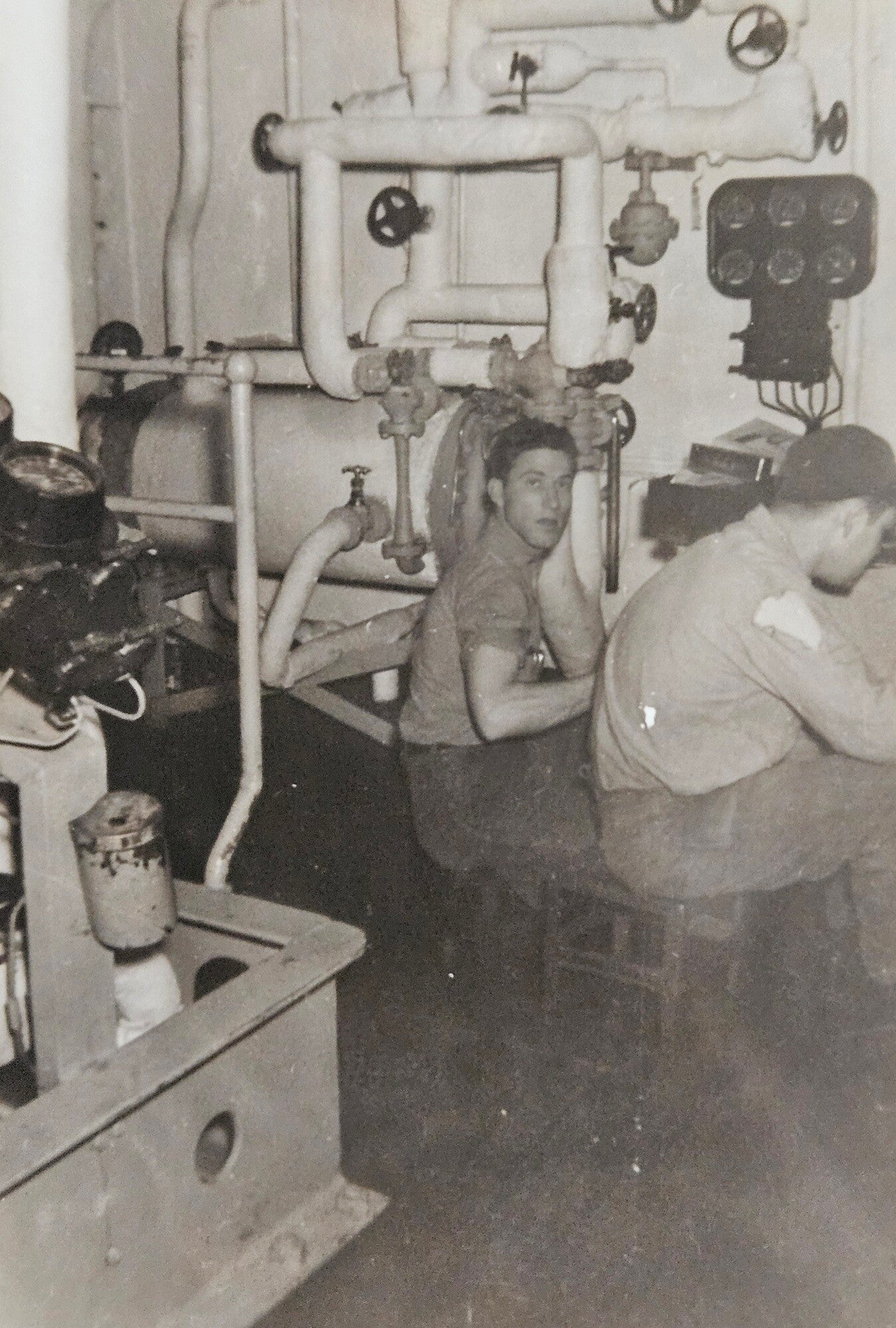
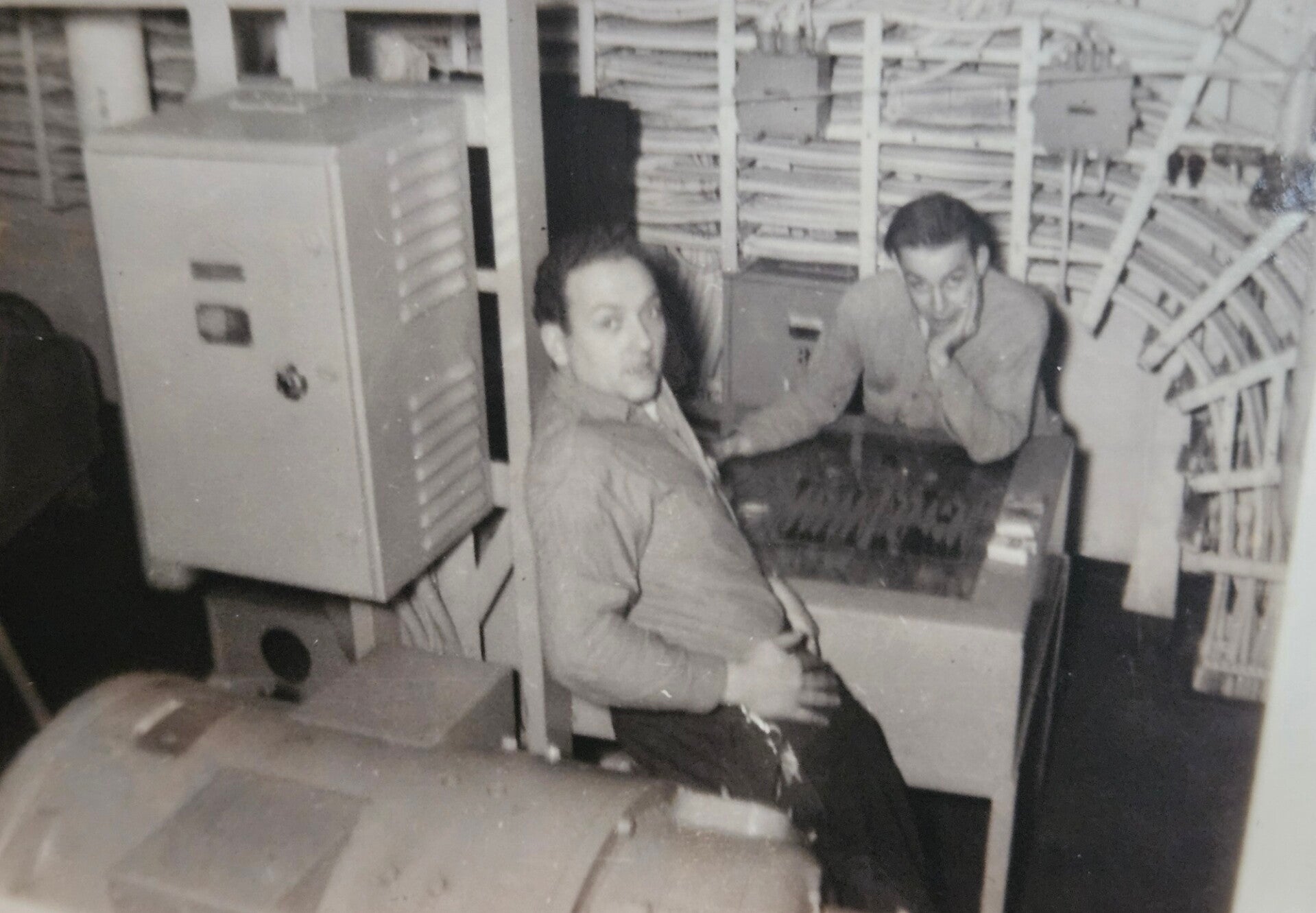
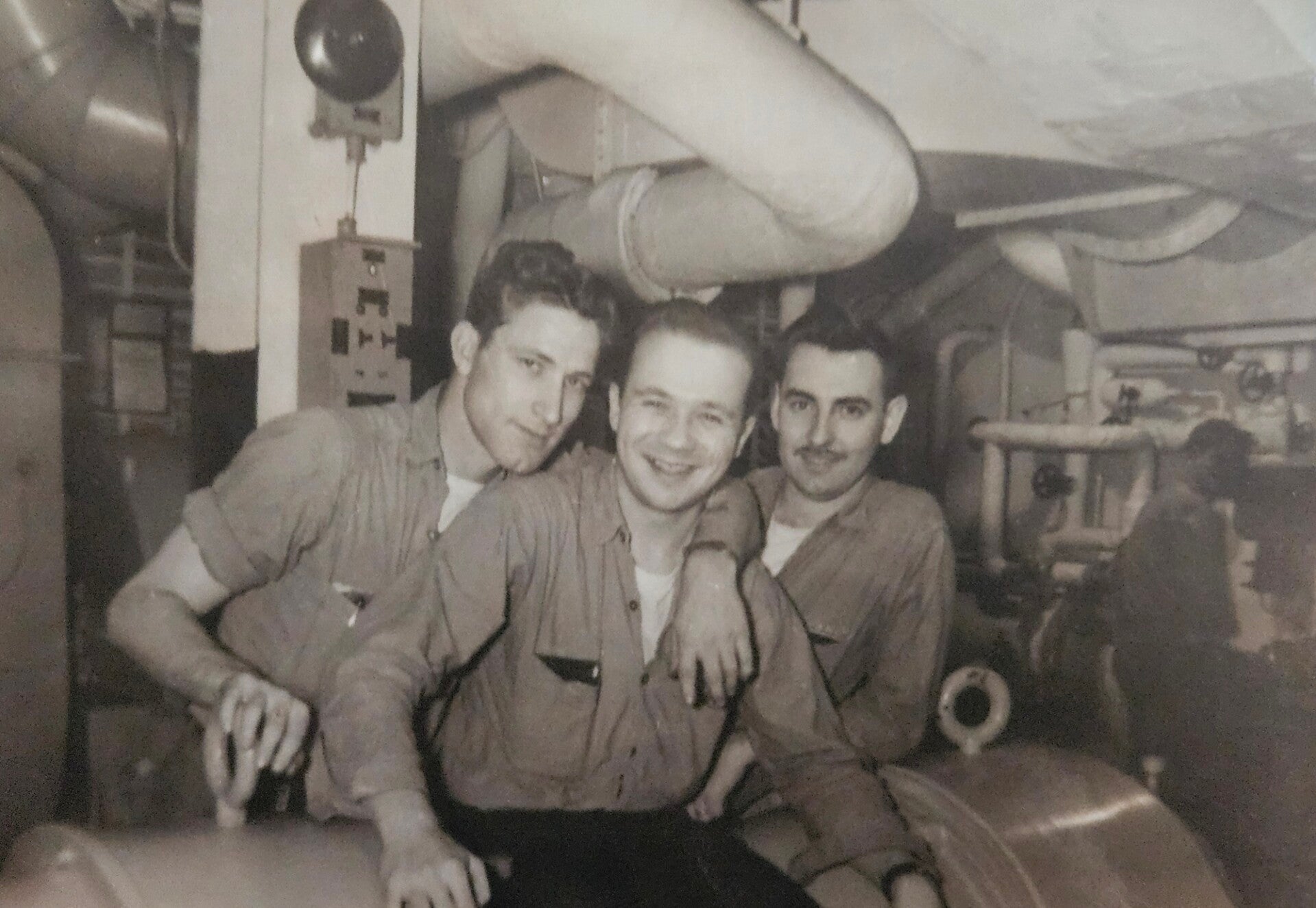
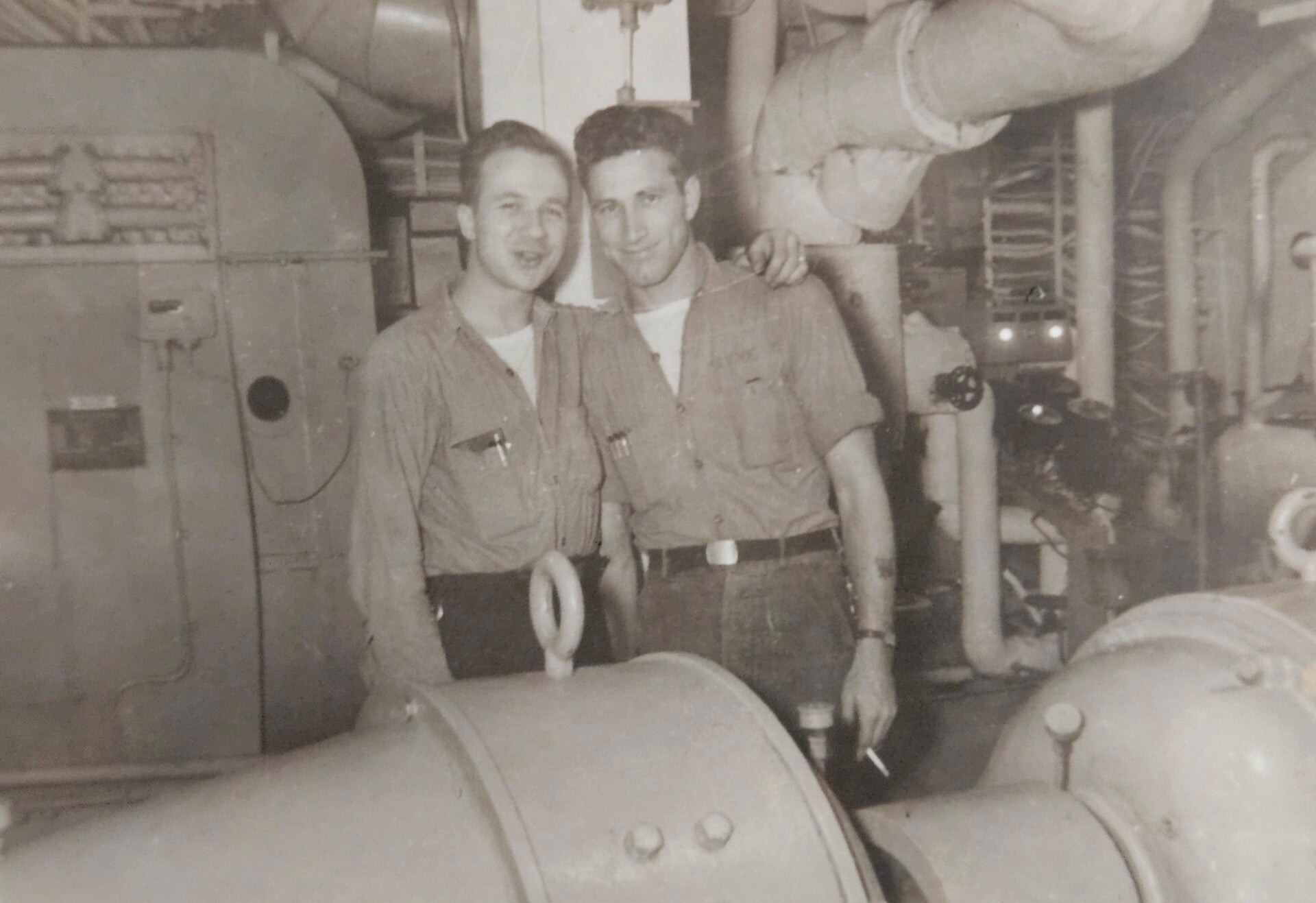
The second set had just a small number of photographs. Still very interesting because this was the USS Antietam which only made a single Korean war cruise between the 8th of September 1951 and 2nd of May 1952. Besides this good info was written on the photographs: this set belonged to a sailor named Ron Frundl who was part of the Engineering Department/ Electrical-(E-)Division. This was the part of the engineering department which was responsible for all things electrical: generators, electrical power, lighting, batteries and internal communications.
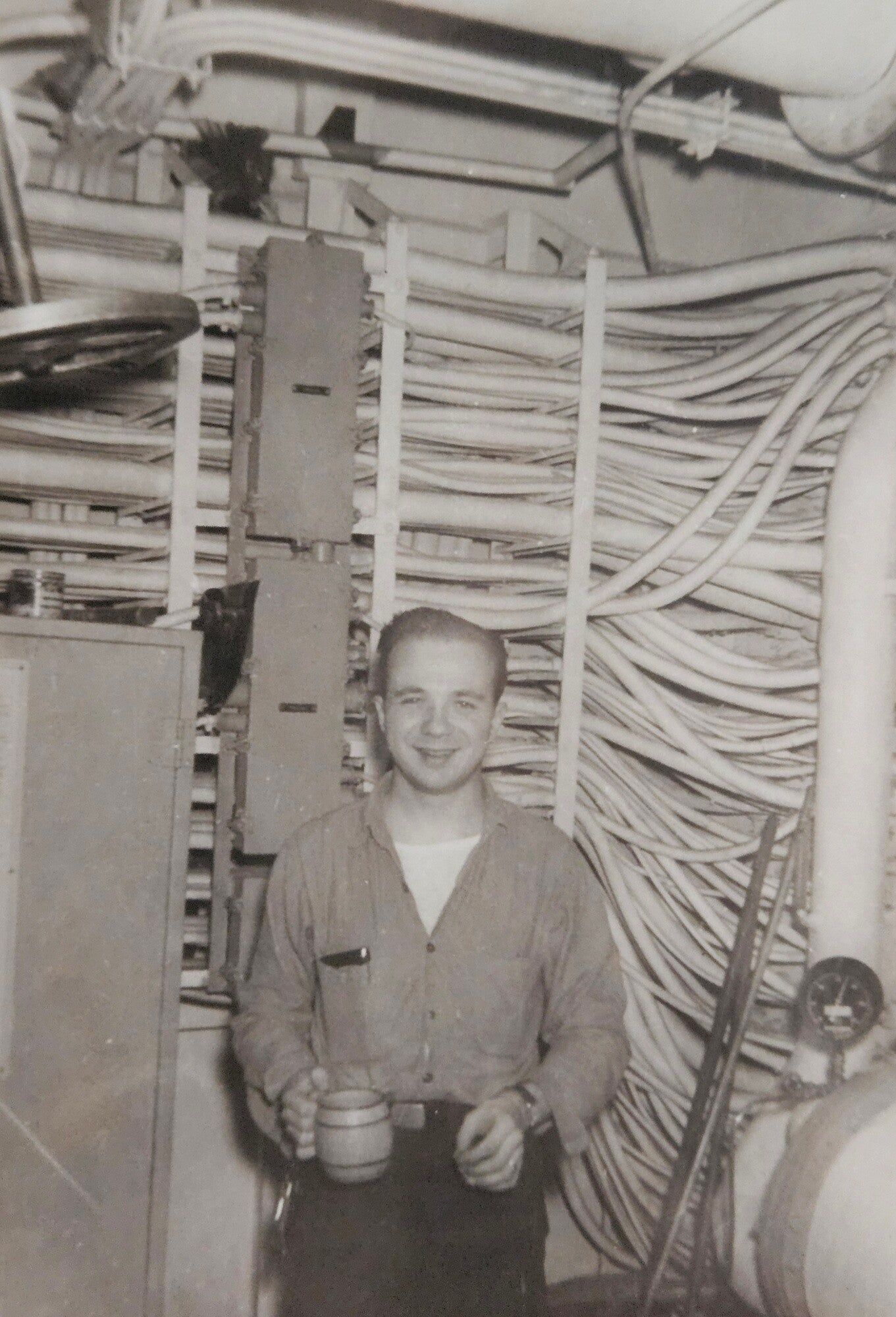
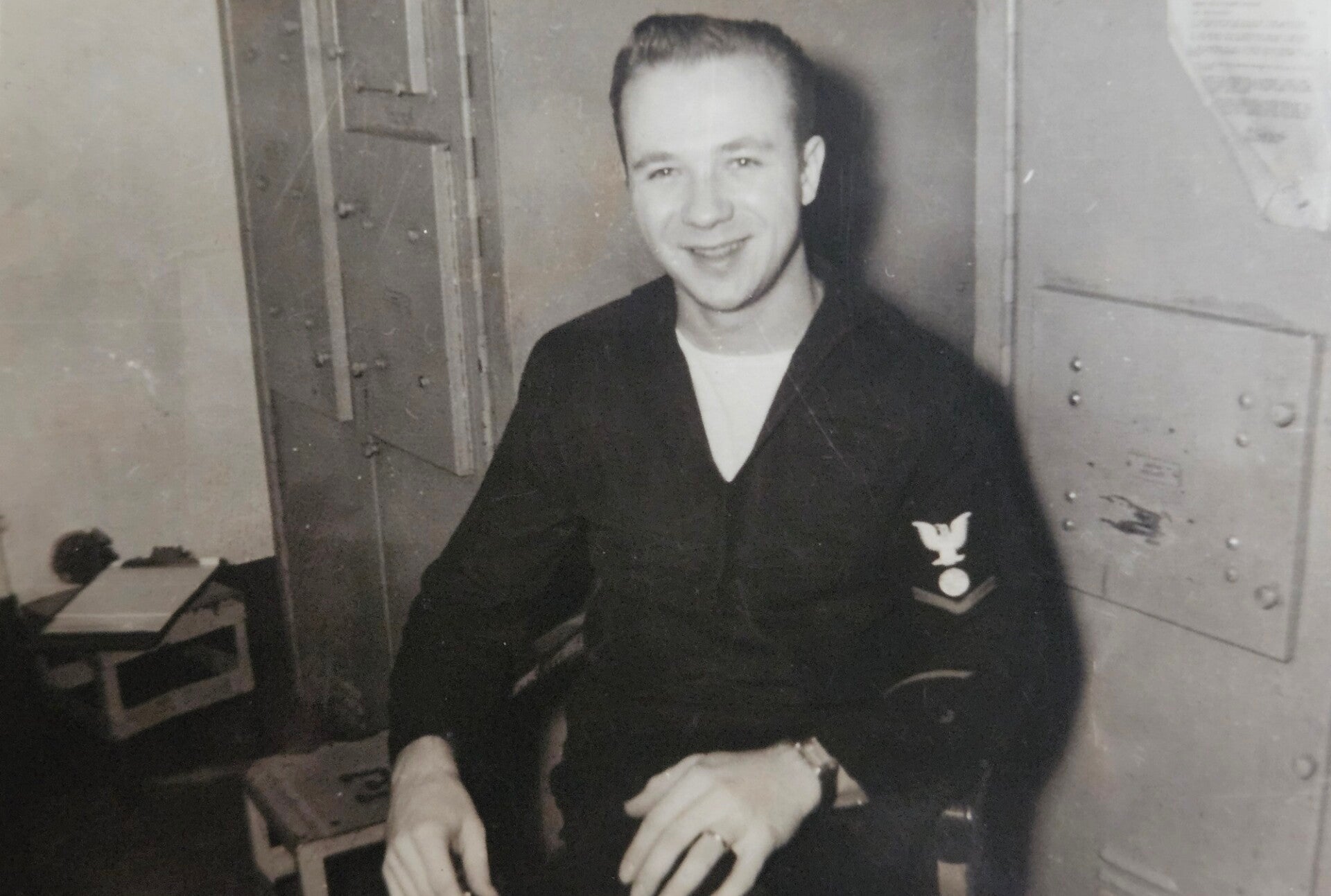
Ron Frundl amidst his working area and colleagues. As can be seen Engineering Division was constantly working in the ships technical compartments. Most likely they either were quite busy or not at all!
General
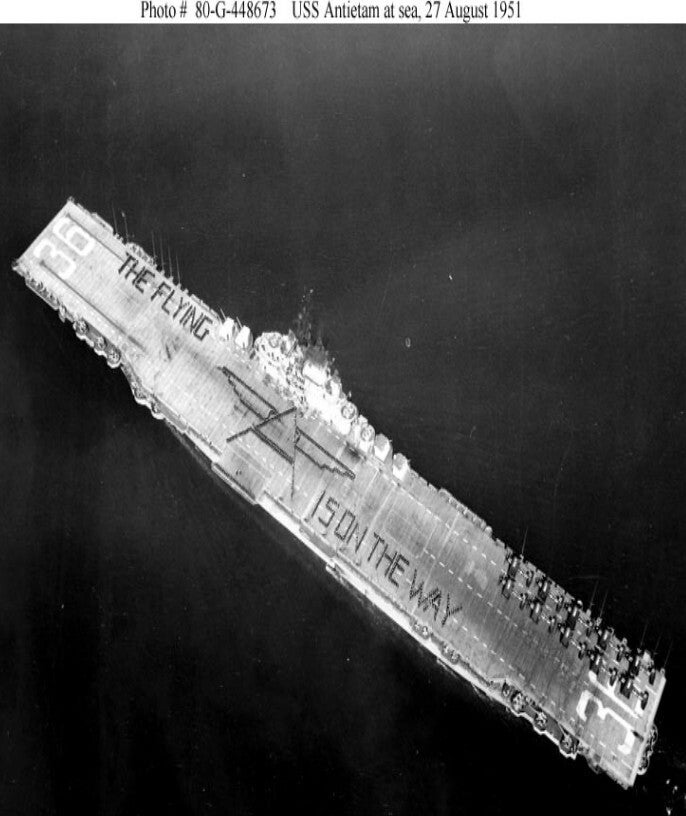
CV-36 USS Antietam was named after the famous and ferocious battle of Antietam 1862 during the American Civil War.
The Antietam was commissioned in 1943, too late to participate in World War 2, but made a single combat cruise during the Korean War earning two battle stars. After the Korean War the USS Antietam made several world cruises and was reinstalled as US Navy training aircraft carrier from 1957 until 1963 when it was decomissioned.
In 1952 this carrier was the very first of the Essex-class carriers to be installed with an angular flightdeck.
Korean War
The USS Antietam operated carrier air wing CVG-15 during this single cruise. It consisted of 4 aircraft squadrons, 4 aircraft squadron detachments and 1 helicopter squadron detachment. All regular squadrons were marked with tailcode 'H'.
- VF-831 “Bluetail Flies” operated the F9F-2 Panther jet aircraft.
- VF-837 "Grandslammers" operated the F9F-2 Panther jet aircraft.
- VA-728 Red Lightning” used the specialized AD-4L (for extreme winter operations) and AD-4Q (ECM).
- VF-713 "Vultures" flying the F4A-4 Corsair.
Detachments of special purpose aircraft from which not an entire squadron were needed were based aboard the USS Antietam. All detachments of CVG-15 were designated Detachment-D and consisted of:
- F4U-5N Corsair night fighters (VC-3 “Blue Nemesis”, tailcode 'NP')
- F-9F-5P Panthers photo reconnaissance (VC-61 “Eyes of the Fleet”, tailcode 'PP')
- AD-4NL night attack aircraft (VC-35 “Night Hecklers”, tailcode 'NR')
- AD-4W aircraft airborne early warning (VC-11 “Early Eleven”, tailcode 'ND')
- HO3S-1 rescue helicopters (HU-1 “Pacific Fleet Angels”, tailcode 'UP')
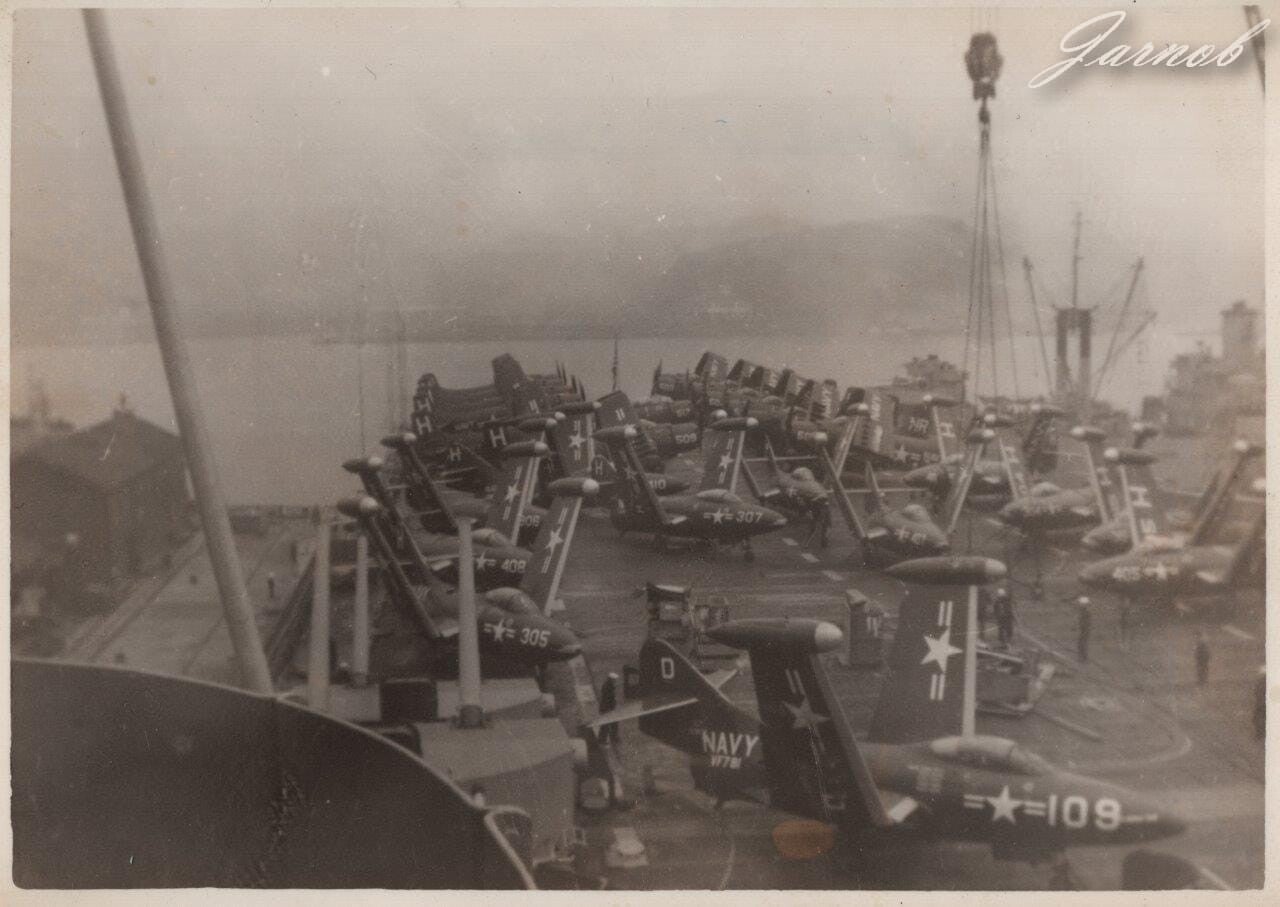
"Dry Dock January 1952" - Yokosuka, Japan.
One of the most interesting photographs of this small lot: a full flightdeck of the USS Antietam 1951/1952. Visible are F9F Panthers of VF-831 "Bluetail Flies" (304H, 305H, 306H, 307H,+), F9F Panthers of VF-837 "Grandslammers" (405H, 407H, 408H, 410H,+), VA-728 "Red Lightning" AD-4's (503H, 509H, 517H,+), an AD-4N of Detachment-D VC-35 "Night Hecklers" (9_NR). A particular strange F-9F Panther can be seen in the foreground: 109D which is an aircraft of the USS Bonne Homme Richards VF-781 "Pacemakers"/ CVG-102 with many mission markings visible beneath the cockpit. The USS Bonne Homme Richard left the Korean area of operations in December 1952 so it is unclear why this aircraft adorns the flightdeck of the USS Antietam.
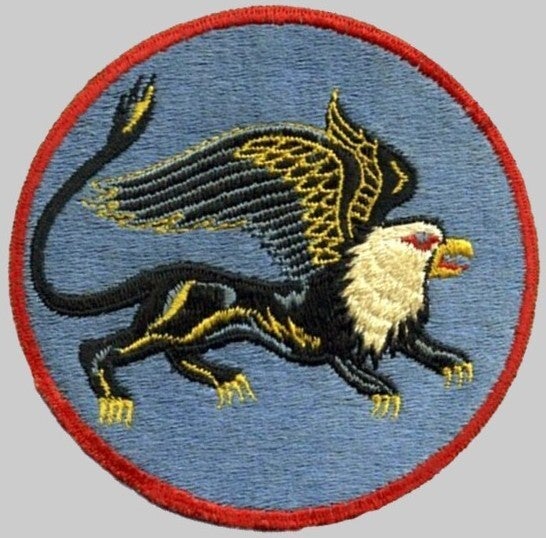
VF-831 "Bluetail Flies"
In 1949 US Navy Reserve squadron VF-718 based at New York Naval Station was redesignated as VF-831, nicknamed "Bluetail flies". It flew combat missions with F9 Panthers during the USS Antietams Korean war combat cruise. Renamed VF-153 in 1953 the F9 Panthers were exchanged for F9 Cougars. For a short while it flew the unsuccessfull FJ-3 Fury (A carrier based F-86 Sabre model) before changing back to F9 Cougars.
In 1956 its main task was changed from fighter to bomber duties, renaming it VA-153 which name it held until the unit was disbanded in 1977. VA-153 would fly several models of A-4 Skyhawks and A-7 Corsairs and flew a large number of combat missions during the Vietnam war.
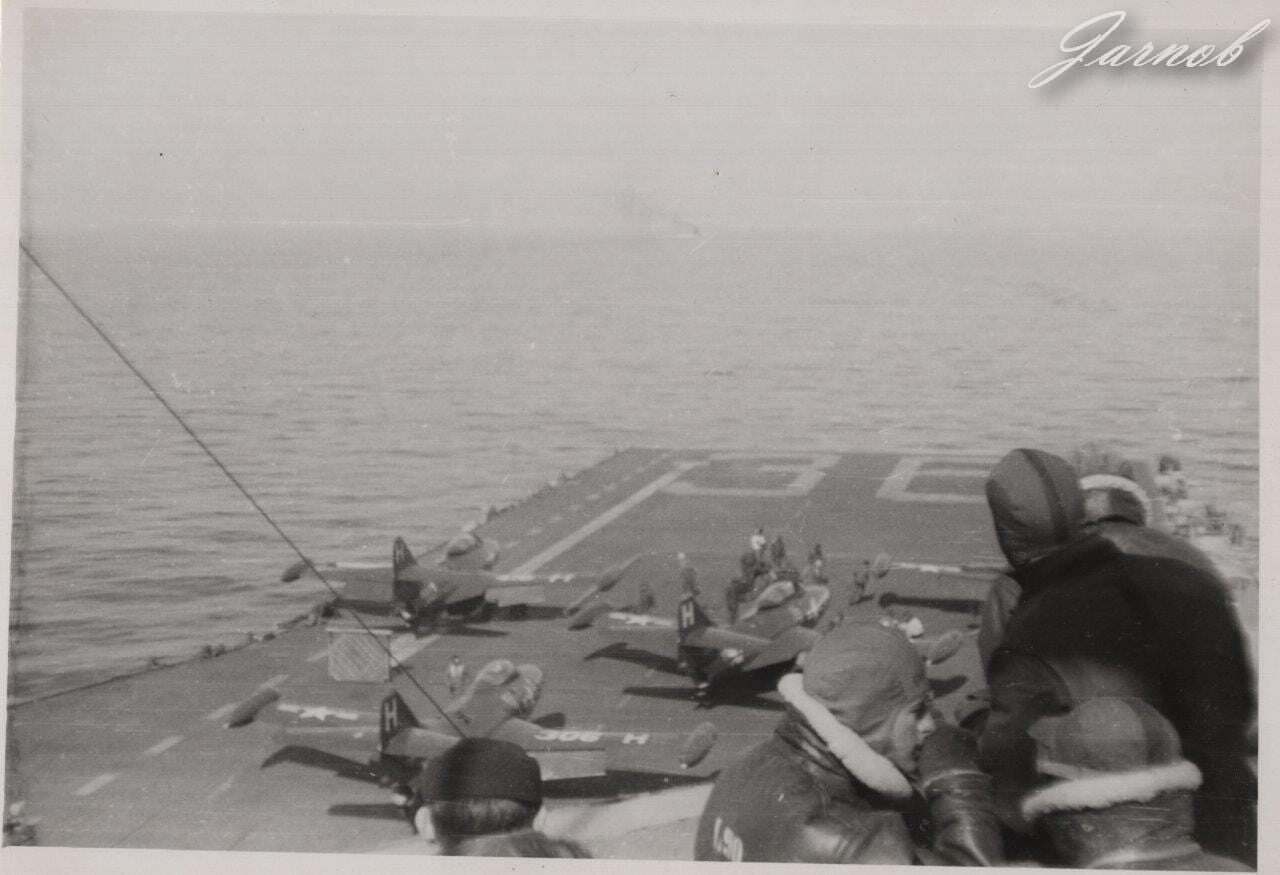
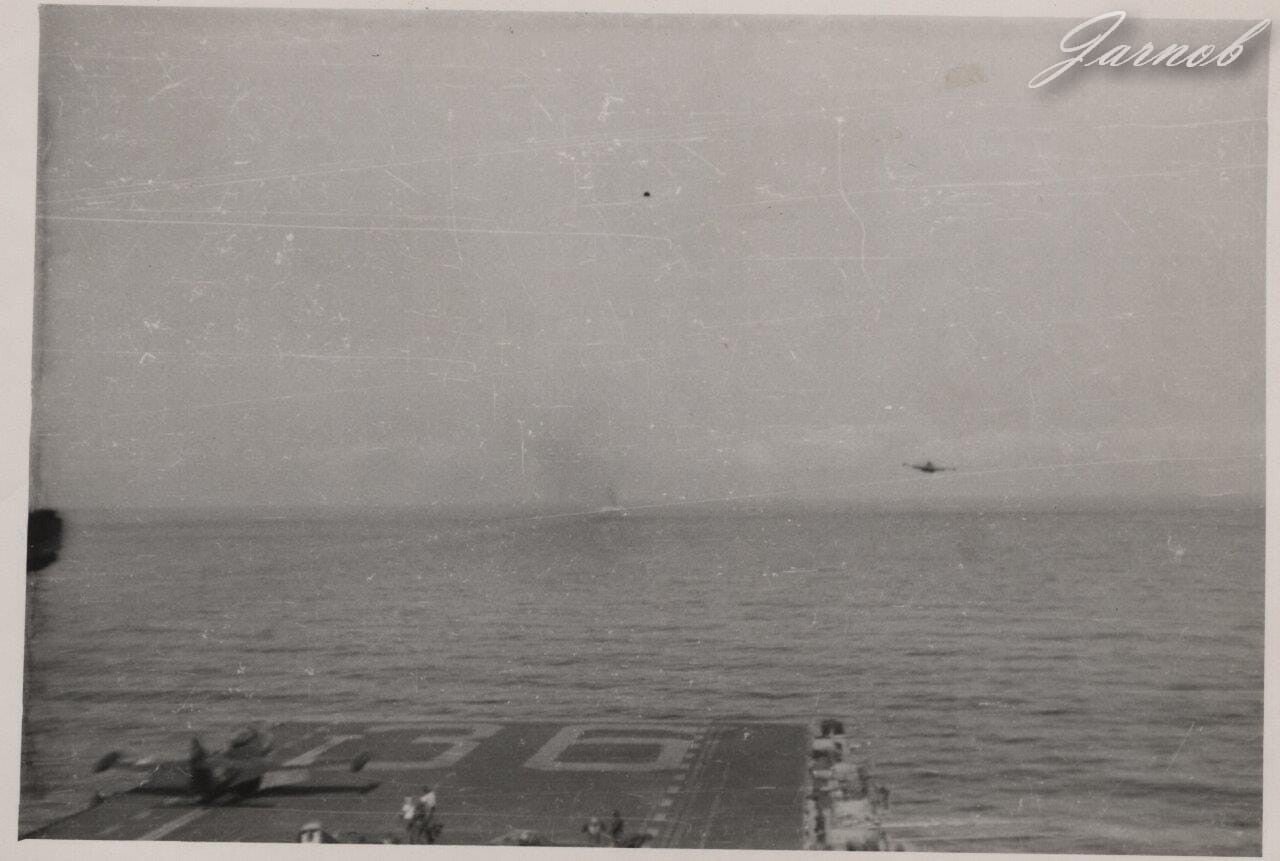
VF-831 "Bluetail Flies" F9F Panthers (among these 306H) departing the USS Antietam. Note the crew men on the right photograph, wearing their distinctive leather neck jackets (due to the extreme cold winds) and caps colored for their division; the one to the left has "LSO" written on its back - Landing Signal Officer, responsible for signalling landing aircraft directions.
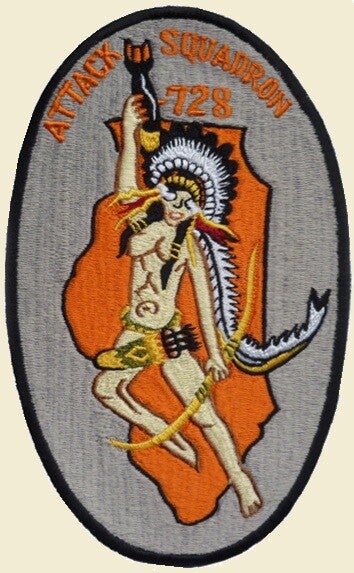
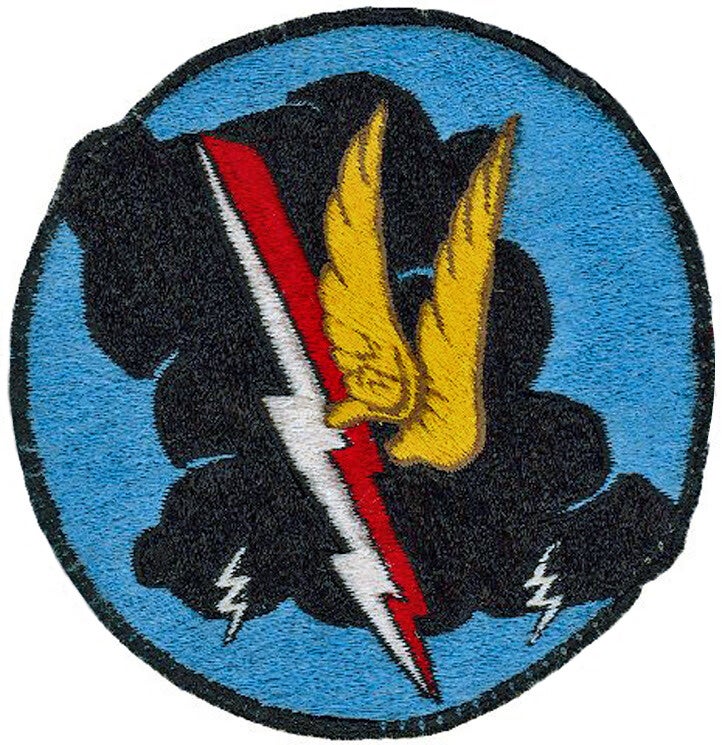
VA-728 "Red Lightning"
VA-728 has a long heritage of different aircraft and specialized purposes. It started as VT-153 using TBM-3E Grumman Avengers. Changed to VA-16A it flew the SNJ Texan trainer for a short while before transferring back to the TBM-3Q ECM aircraft and later added the TBM-3W AEW&C.
For a year it was renamed VA-155 flying AD-2/AD-4 Skyraiders - being renamed several other small periods before finally being renamed VA-728.
As VA-728 the unit flew AD-1, AD-2, AD-4 strike bombers and AD-4L (extreme winter version), AD-4Q (ECM) aircraft. It participated in the Korean was aboard the USS Antietam, was withdrawn back to CONUS and refitted with AD-4NA (Night attack), AD-6 and AD-7 Skyraiders before being sent back to the Korean war - this time aboard the USS Princeton in 1953 flying the AD-4NA Night attack aircraft.
After the Korean war it was redesignated VA-155 flying the AD-6 Skyraider. It would soon be re-equipped with A4 Skyhawks and sent to several combat cruises during the Vietnam war, during which it was re-equipped with the new A-7 Corsair. After the Vietnam war VA-155 was disbanded in 1977.
10 years later in 1987 VA-155 was re-commissioned and equiped with the A-6E Intruder and KA-6D (AAR). VA-155 participated in the 1991 Gulf War en flew a great number of combat sorties. In 1993 the unit was disbanded.
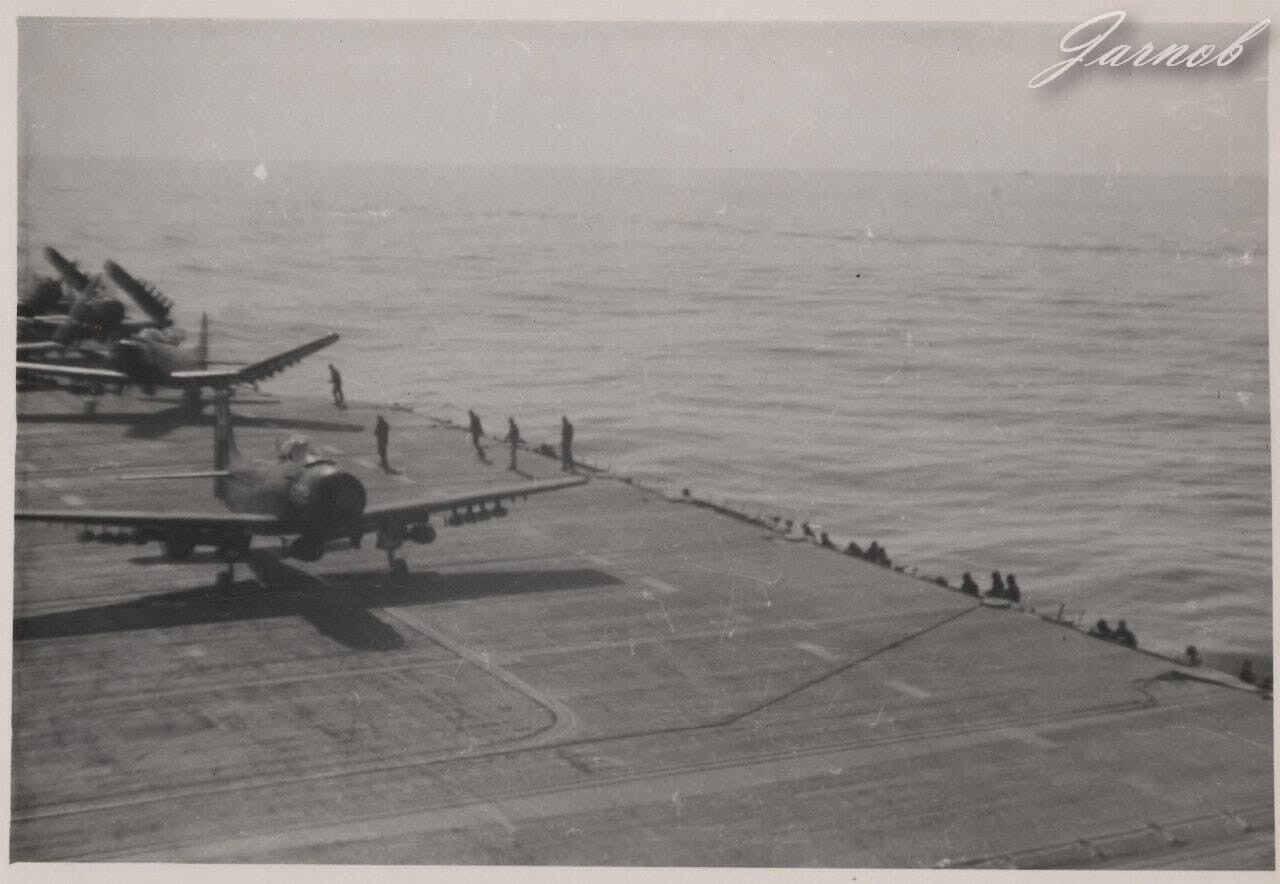
VA-728 "Red Lightining" AD-4's taking off - starting from the rear flightdeck these aircraft are fully loaded: the aircraft in the front (508H) has 4 bombs per outer wing and 1 larger bomb per inner wing. The AD-4's in the background seem to have 8 rockets per outer wing.
VF-713 "Vultures"
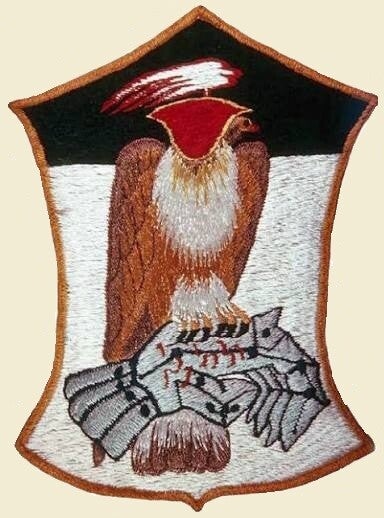
VF-713 originates from one of the most famous World War 2 naval squadrons: VF-152. This unit flew the F6F Hellcat and participated in the "Marianas Turkey shoot" during which naval pilots shot down 402 Japanese aicraft. It also fought during most well known battles among these Wake Island, the Philippines Islands and Palau Island.
Before the Korean war the squadron was reactivated as VF-713 and particpated in combat cruises during the war aboard the USS Antietam and later the USS Princeton, during which it was renamed "The Fighting Aces".
After the Korean war it was renamed again back to VF-152 and re-equipped with the F2H Banshee. Renamed VA-152 the squadron operated the A-6 (A-1) Skyraider when the Vietnam war started; a detachment was stationed in South Vietnam to train Vietnamese pilots on the Skyraider. During the Vietnam war the unit transferred to the A-4 Skyhawk. The unit was disbanded in 1971.
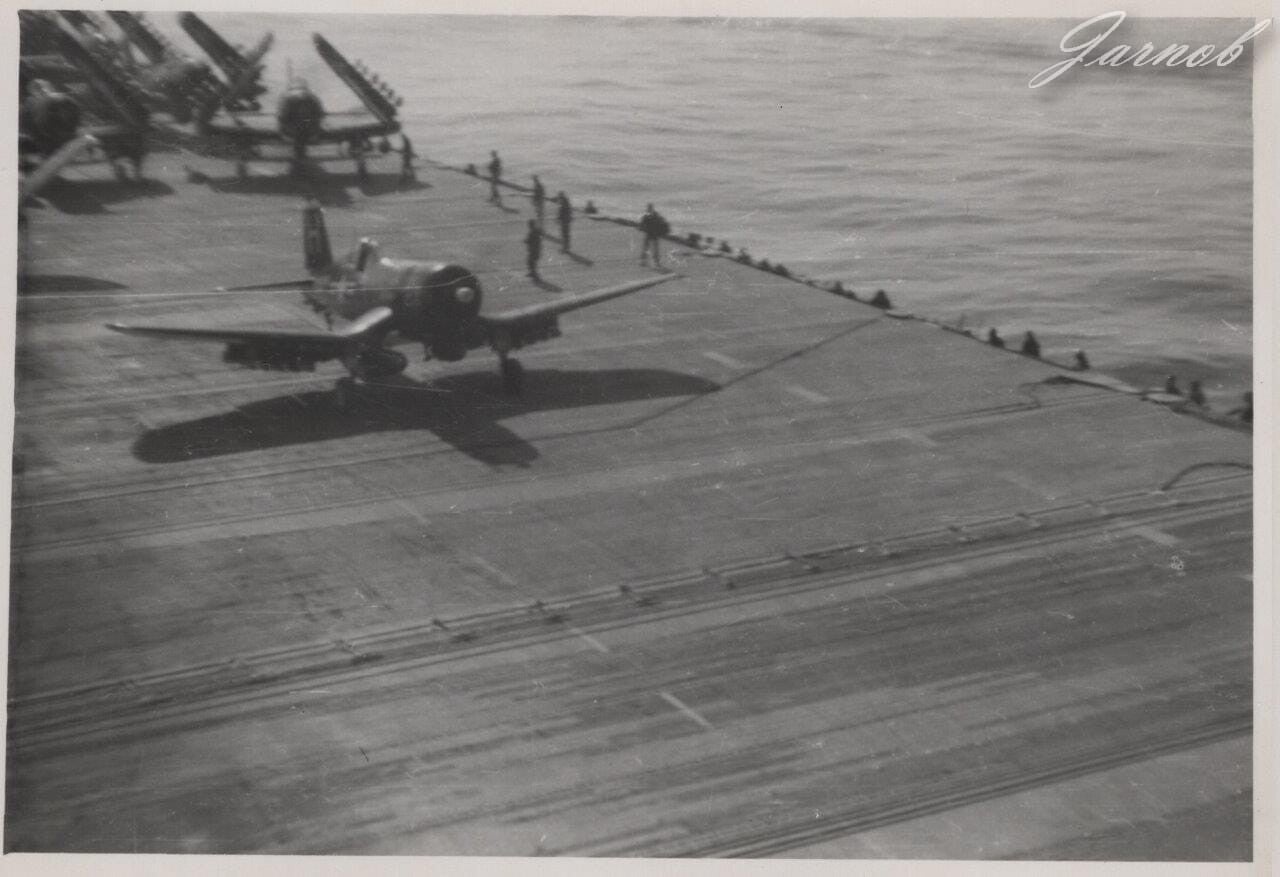
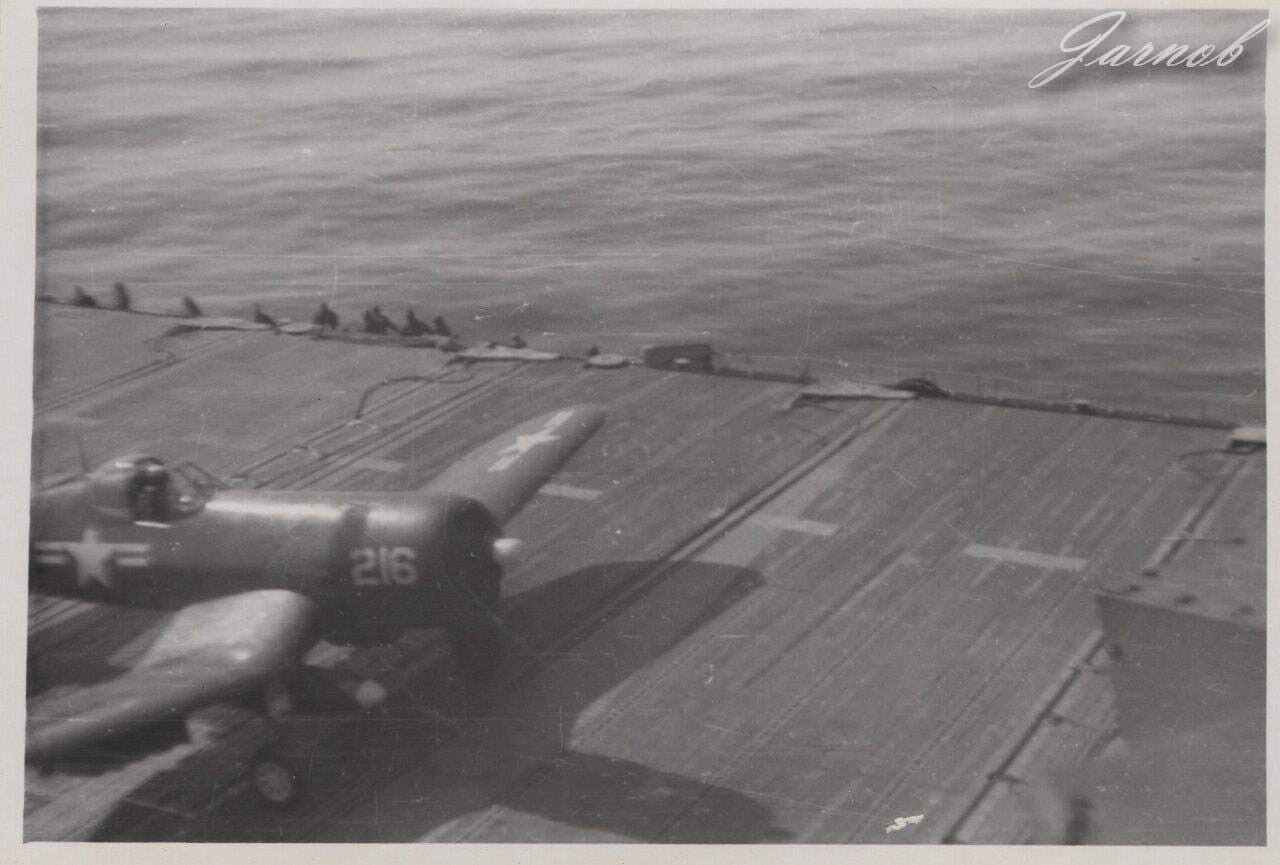
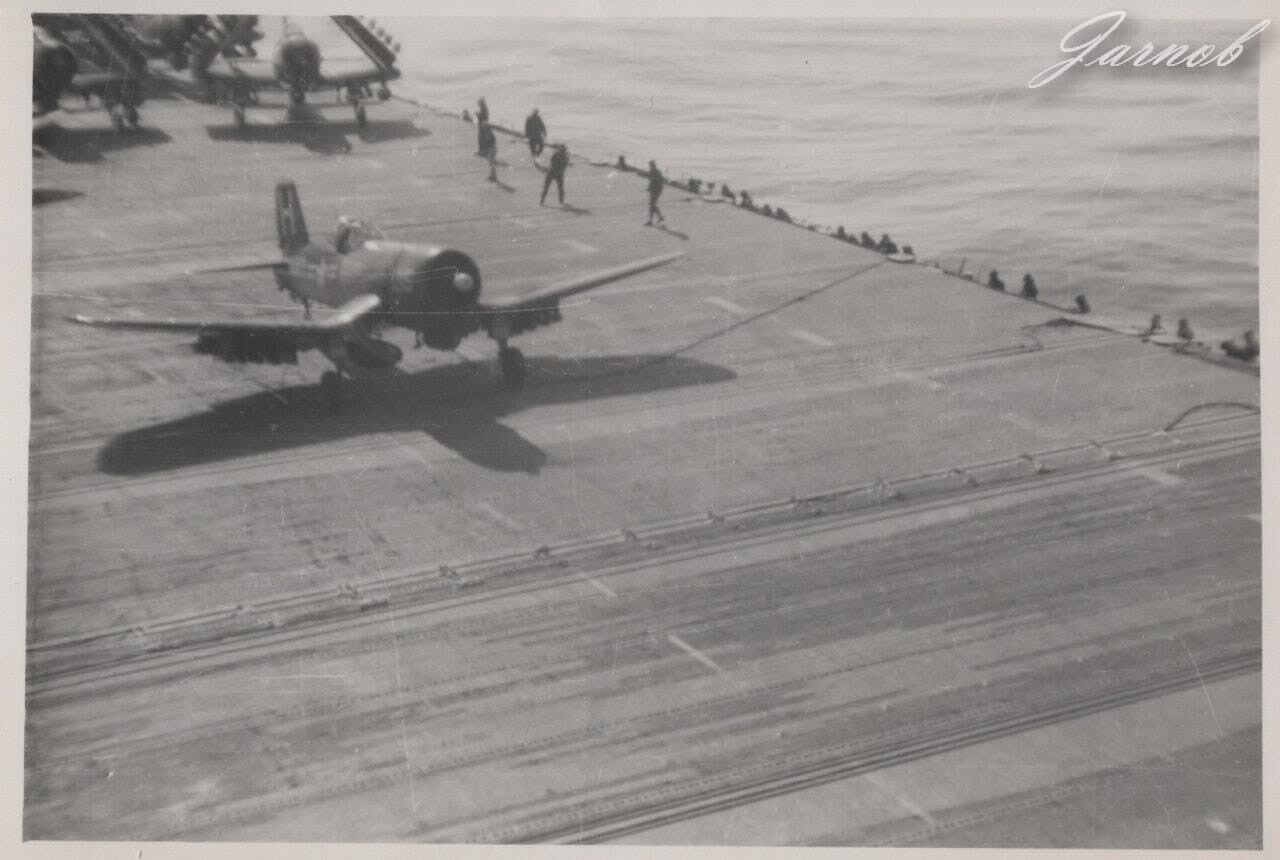
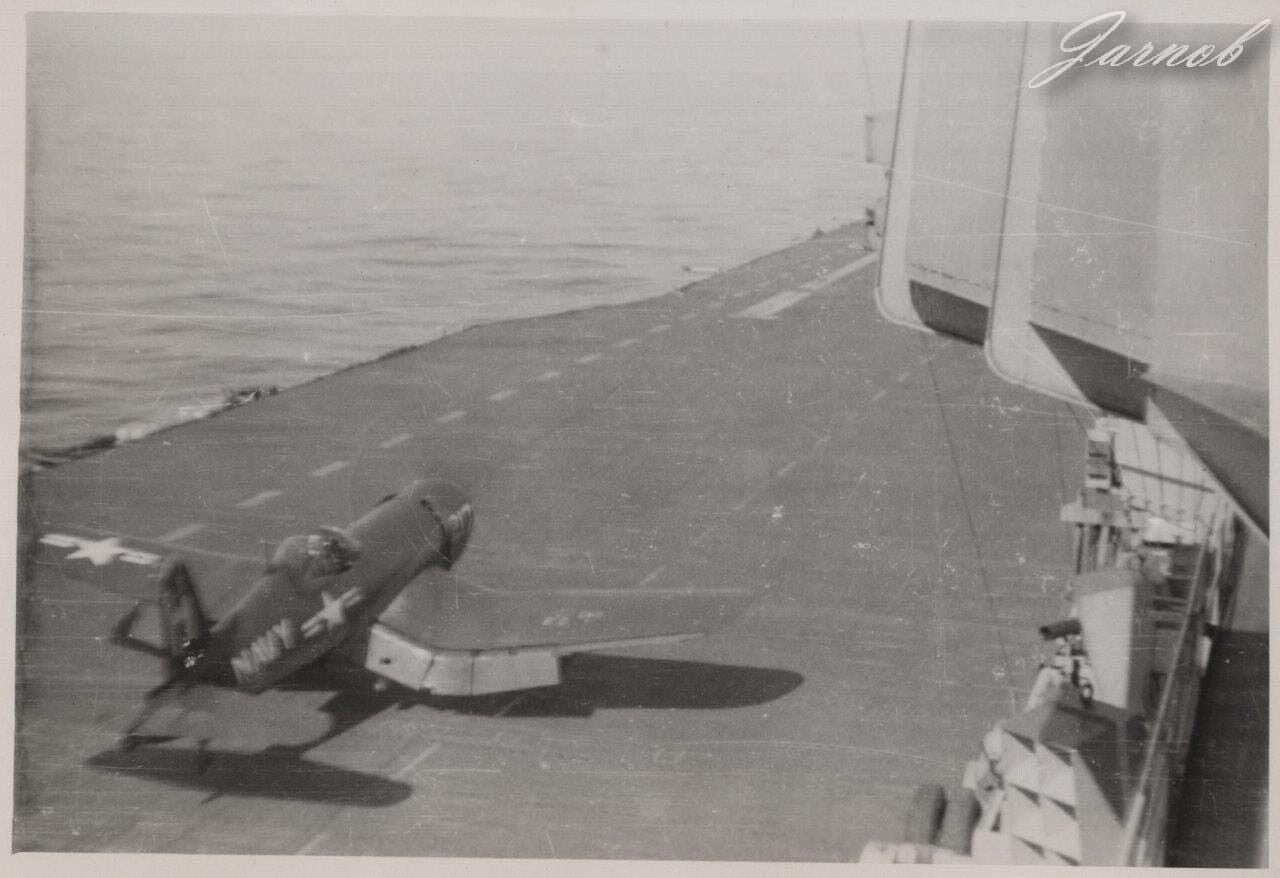
Many VF-713 "Vultures" F-4U Corsairs taking off (among htese the 215H, 217H and 216H). All seem to be loaded with air-to-ground ammo.
*badges from the website https://skyhawk.org/